
Amy Griman on Clarity, Communication and Building What Lasts
By Kristen Oliveri
In the world of institutional wealth, scale is often seen as the ultimate marker of success. But for Amy Griman, true durability comes from something deeper, clarity of structure, strength of governance and the ability to lead through complexity with intention.
After more than three decades leading ultra-high-net-worth platforms at scale, including her role as Global President of BMO Family Office and CEO of BMO Delaware Trust Company, she made the decision to step out on her own. It was a move grounded not in stepping away from the work, but in getting closer to it—working directly with founders, family offices, and leadership teams at the moments that matter most.
Today, through Delta Creative Group, she advises on the intersection of growth, fiduciary responsibility, and operational design, helping ensure that as platforms evolve, they do so with clarity and integrity.
At the core of Griman’s work is a distinct superpower: communication. The ability to ask the right questions, bring alignment to complex dynamics and guide leaders through decisions that often sit at the intersection of strategy, structure, and human behavior. In this conversation, we explore her journey, what she’s learned from operating at scale, and how she’s thinking about the next chapter, both for the industry and for herself.
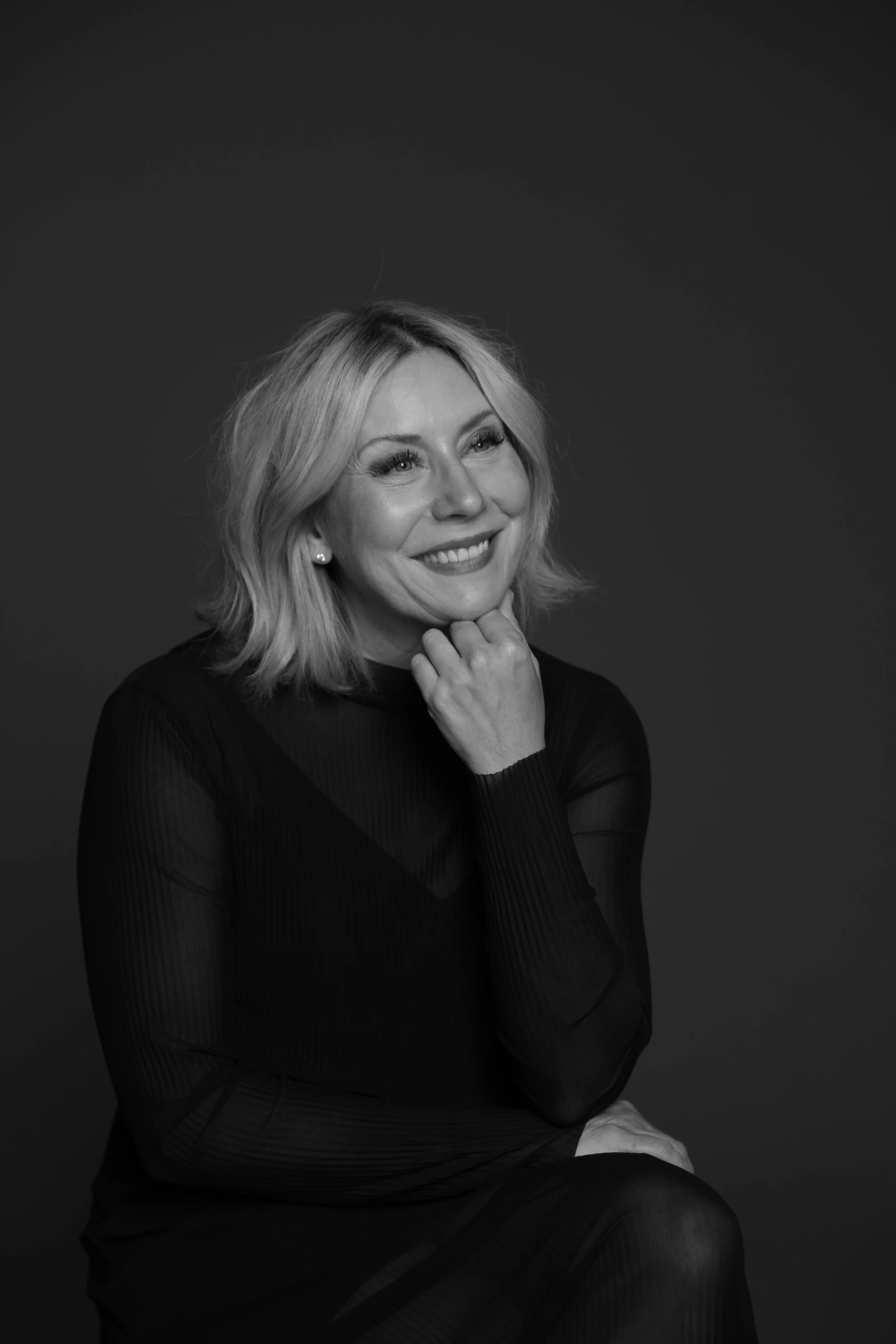
Q: You spent more than three decades in senior leadership roles within major institutions, including serving as Global President of BMO Family Office. What ultimately inspired your decision to step out of the corporate world and into entrepreneurship?
A: The decision wasn’t about leaving something behind. It was about stepping closer to the work I found most necessary—and most underserved.
Over the course of my career, particularly in the family office space, I was consistently drawn into situations where the challenge wasn’t technical. The plans were sound, the structures were in place, and the advisors were highly capable. But something wasn’t holding.
What I saw, repeatedly, was that the real work sat in the gaps—between advisors, within families, across governance structures, and over time. That’s where complexity lives, and it’s where most traditional models begin to show their limits.
Large institutions are highly effective at delivering expertise within defined domains. But many of the challenges families face today require a more integrated approach—one that addresses how structure, people, and decision-making interact over time.
I was working on bringing this focus to clients and there was an inflection point where I could decide to focus on this “real work” more directly working with greater precision and flexibility, and engaging where alignment, clarity, and trust are critical to long-term success.
Delta Creative Group came from that shift.
Q: Leaving an established leadership position can be both liberating and uncertain. What surprised you most about this transition professionally and personally?
A: What surprised me most was not the uncertainty—it was the clarity.
In an institutional setting, even at the highest levels, your role is shaped by the structure around you. There are defined priorities, constraints, and ways of operating. You’re effective within that system, but you’re still operating inside it. Stepping out of that environment removed a layer of noise I didn’t fully appreciate was there.
It clarified where I create the most value, which is entering and leading in complex situations, diagnosing what’s actually happening, and helping realign the system so it can function effectively over time.
It also reinforced the importance of focus. Without a predefined role, there’s a temptation to expand too broadly. What I’ve found instead is that impact comes from being selective and precise about where and how I engage.
There are, of course, other things that are different. I do miss the busyness of the office and talking with a lot of people over the course of the day, but there are other benefits, like flexibility!
Q: Throughout your career, you’ve worked at the intersection of families, advisors, boards and regulators. Where do you most often see misalignment or breakdown occur in complex wealth systems?
A: Most breakdowns don’t happen because of poor advice. They happen because the system itself is misaligned with what families actually need.
The traditional model is still built around disciplines—investment management, tax, estate planning—delivered through a coordinated team. That model works well for wealth creation and preservation.
But in the family office space, the complexity is fundamentally different. You’re not just managing assets. You’re navigating identity, relationships, generational transition, and decision-making under pressure. The model hasn’t fully evolved to meet that reality.
What I see most often is fragmentation:
Advisors optimizing within their domain, but not for the system as a whole
Families making technically sound decisions that don’t hold in practice
Governance structures that exist on paper but lack real authority or trust
Underneath all of it is a lack of attention to how people truly operate. Decisions in these environments are shaped by deeply ingrained patterns, family dynamics, and varying levels of readiness for change. If that isn’t understood, even the best technical strategy won’t sustain. It’s something I have seen all too often.
Ultimately, the breakdown is a failure to build legitimacy, without which no structure or plan can function over time.
Q: You describe your approach as “human-centered” in highly complex environments. What does that look like in practice when families are navigating change, conflict, or major decisions?
A: In practice, it means I don’t start with the solution—I start by assessing whether the system can hold the solution. In complex family environments, most of the technical work is already well-covered. But those elements alone don’t determine whether something will work; that has been proven time and time again.
What matters is whether the people involved understand it, trust it, and are prepared to operate within it—especially under pressure.
I begin by understanding three things: the structure, the people, and the history. From there, I identify where misalignment exists and focus on the few areas that will determine whether the system holds or breaks.
Sometimes that means slowing down before making technical changes—building clarity, restoring trust, or creating space for people to engage with what’s already in place. Human readiness is key in determining sequence and pace. Because without that foundation, even the best strategy won’t sustain.
Q: Through Delta Creative Group, you focus on communication, shared narrative and cultural cohesion. Why are those elements just as critical as financial strategy in sustaining wealth across generations?
A: Because financial strategy doesn’t operate in isolation—it operates inside a human system. As we’ve said, the technical components are well-developed. But those elements alone don’t determine whether wealth sustains or evolves effectively over time.
What determines that is whether the system around those strategies can support them—through growth, transition, and, at times, disruption. And for that system to be effective and resilient, the family and key stakeholders have to see and understand the plan. Only then does the plan, structure and processes have legitimacy.
Communication, shared narrative, and cultural cohesion create clarity around how decisions are made, what the wealth represents, and how different generations engage with it. That is what builds legitimacy. Without that, even the best strategy becomes fragile—because it’s not consistently understood, trusted, or applied.
When those elements are in place, families and their advisors are able to make better decisions and adapt more effectively, and you have a higher chance that all are invested and “in”. They don’t replace financial strategy—they enable it to function at a higher level.
Q: When families are facing pivotal transitions like generational shifts, leadership changes or uncertainty about the future, what helps them move forward with clarity and confidence?
A: Clarity and confidence come from structure, transparency, and continuity—not from speed.
In periods of transition, there’s often a push to move quickly to solutions. But what’s more important is establishing a shared understanding of what’s happening and how decisions will be made going forward.
That includes:
Clear leadership and decision-making authority
Consistent communication and information flow
A framework that allows individuals to engage at the right pace
People need time and repetition to absorb change and build trust in a new structure. I saw this consistently in my work—grief, frustration, change. They all take a bit of time for us to accept and absorb. Moving too quickly to the “business” of the change can be very disconcernting.
When leadership is visible and communication is intentional, the system begins to stabilize. From there, families can make decisions with greater confidence because they understand both the process and their role within it.
Q: Tell us more about Delta Creative Group. What gap did you see in the market, and what kind of impact are you hoping to create through this work?
A: Delta Creative Group was built to address a gap I saw repeatedly in complex wealth environments.
Most advisory models are designed to deliver expertise within specific domains. As discussed, those capabilities are essential, but they don’t fully address what happens across those disciplines—particularly as families grow, evolve, or face transition.
My work focuses on helping families and advisory teams bring greater clarity, alignment, and effectiveness to the overall system—whether they are building for the future, navigating change, or addressing areas that are no longer functioning as intended.
I begin by understanding the full picture—structure, people, and history—and then identifying the few areas that will have the greatest impact on how the system operates over time.
The outcome is not just better plans, but systems that are intentional, well-understood, and capable of sustaining both the financial and human dimensions of wealth. And systems that will hold regardless of circumstances.
Q: Having operated at the highest levels of leadership, what personal qualities or experiences have most shaped how you lead through complexity?
A: The qualities that have shaped how I lead through complexity are patience, conviction, consistency, and a very grounded form of kindness.
Complex environments don’t resolve on demand. They require the ability to hold multiple moving pieces—structural, relational, and historical—without forcing premature decisions. Patience, in that sense, is not passive. It’s the discipline to allow clarity to emerge before acting.
Conviction is equally important. There are moments where the pressure is to simplify, move faster, or align with what feels more comfortable in the moment. I’ve learned the importance of holding a broader view—trusting the pattern of what’s actually happening, even when it’s not yet fully visible to others.
Kindness, in my experience, is often misunderstood. It’s not about softening reality—it’s about being transparent and clear about what is happening, in a way that people can hear and engage with. That clarity is what allows movement.
And then there is consistency and diligence. The work itself is not a single decision or intervention—it’s a series of conversations, often over time, that gradually build understanding, trust, and alignment. Staying steady in that process is what allows the system to shift in a way that lasts.
Those qualities have been shaped through experience—working in environments where the stakes are high, the dynamics are complex, and the outcomes carry long-term consequences. Over time, they’ve become less about how I lead, and more about how I hold the work itself.
Q: Looking back on your career, what lessons have you learned about being a woman in the wealth and family office industry, particularly in leadership roles?
A: One of the more consistent dynamics I’ve observed is how different approaches to leadership are interpreted—and often misinterpreted.
There is a strong bias in this industry toward speed, certainty, and technical authority. Those are important and have their place, but they’re not solely sufficient for navigating complex family systems.
Approaches that incorporate nuance, pattern recognition, and a broader understanding of human dynamics are often labeled as “soft.” In reality, those are the capabilities required to make decisions that hold up over time and move families, humans, through change.
Early in my career, I felt that tension directly. I adjusted, experimented, and at times moved away from my natural way of thinking in order to align with more traditional expectations. That process was instructive, and sometimes it worked for me—but it also clarified where that model falls short.
Over time, I became more deliberate about refining how I think and lead, rather than overriding it, especially as these patterns in wealthy families became apparent to me.
The complexity of this work requires a wider lens and more precise judgment, not a narrower one. And increasingly, there’s recognition that diversity in how leaders think and operate is not optional—it’s necessary.
Q: A few personal reflections: what would you consider your superpower, and what advice would you give to women considering a major career transition or entrepreneurial leap?
A: I’m exceptionally good at identifying what’s actually driving a situation beneath the surface—and articulating it in a way that creates clarity and movement. I see the nuances and relational components easily.
In complex environments, what’s visible is often not what’s decisive. Being able to see the underlying dynamics and make them understandable to others is what allows progress to happen.
In terms of transition, clarity doesn’t always come before action—it often develops through the process itself.
There can be pressure to follow a defined path or to make decisions that feel immediately certain. What I’ve found is that the more important work is understanding where you create the most value and being willing to move toward that with intention. I would tell any woman considering a career shift to be very clear about what they do extremely well and leverage it!