
Where Wealth Meets Learning: A New Model for Family Readiness
By Kristen Oliveri
Family wealth is rarely just about assets. It is about identity, responsibility and the question of what is meant to endure across generations. Yet for many families, the focus remains on managing capital rather than preparing the people entrusted to steward it.
In this conversation, Kristen Oliveri sits down with Kirby Rosplock, PhD, Founder and CEO of Tamarind Learning and Tamarind Partners, to explore the critical role of education in building resilient, capable families. Drawing from both personal experience and decades of research and advisory work, Rosplock shares why investing in human capital—through learning, clarity and engagement—is essential to long-term continuity.
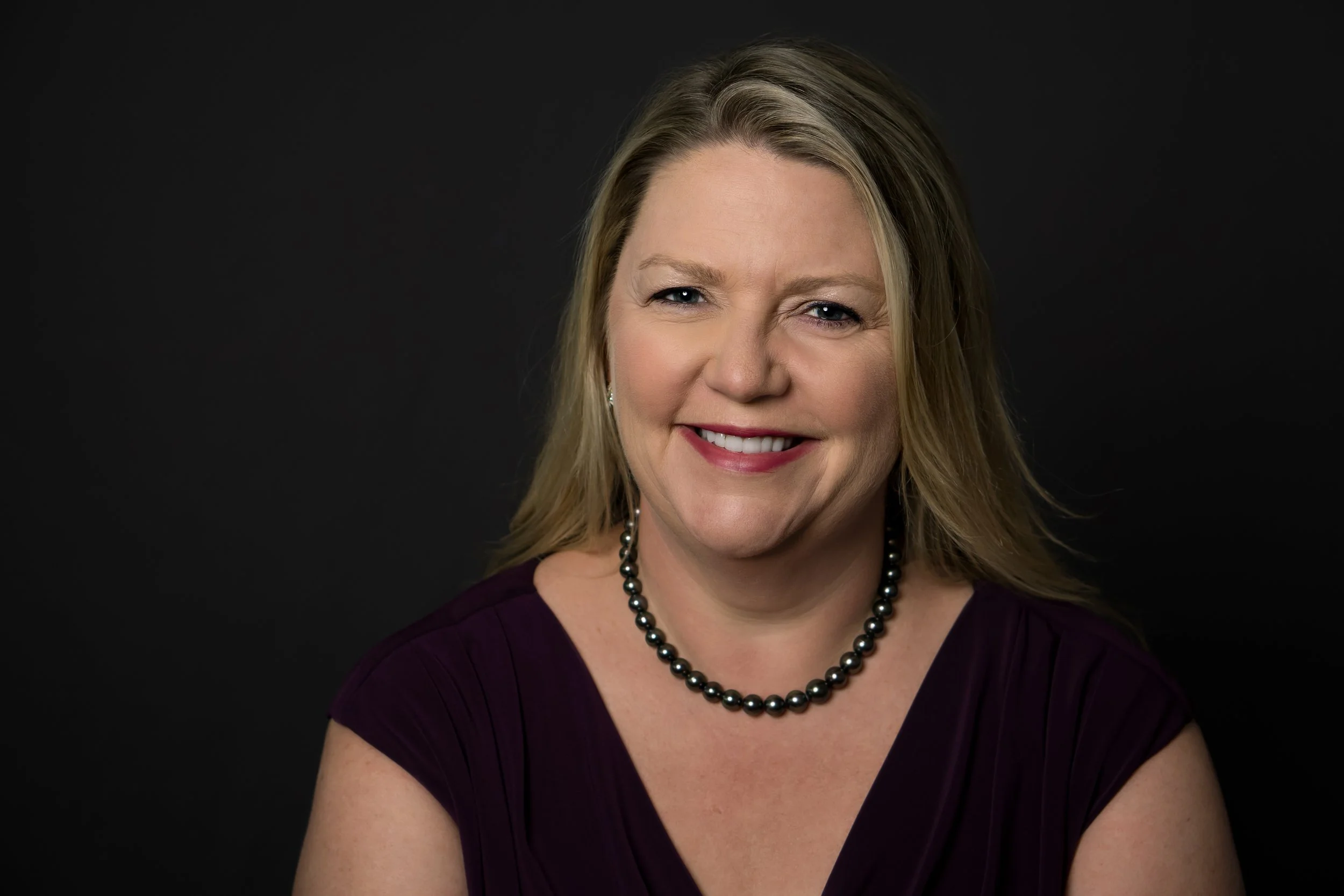
Q: Your career has been deeply rooted in advising family offices and researching family enterprise. Can you share a bit about your personal background and what first drew you to this field?
A: Absolutely. For me, this work is both professional and deeply personal. I grew up in a complex, multi-generational enterprising family, so I didn’t come to this world as a detached observer. I came to it from lived experience, as someone who understands that family wealth is never just about assets. It involves identity, responsibility, stewardship, and belonging.
What drew me in early was the realization that families can be incredibly well-resourced and still profoundly underprepared. They may have excellent structures, great advisors, and sophisticated investment systems, but if the people inside the system do not understand their roles, the language of wealth, or how to work together, things can break down quickly.
That tension fascinated me. I wanted to understand not just how families preserve wealth, but how they prepare people. That became the throughline of my career.
Q: Family offices are such a unique intersection of business, family dynamics and legacy. What fascinated you most early on that kept you engaged in this work for so many years?
A: What drew me in most was that family offices sit at this incredibly charged intersection of money, meaning, memory, and power. You have capital, yes — but also history, hopes, unresolved dynamics, and the very human question of, “What are we really trying to carry forward together?”
I was captivated by the fact that family offices can be beautifully designed on paper and still deeply complicated in practice. That’s because families are not spreadsheets. They are living systems. And when you layer in governance, succession, inheritance, values, and expectations, the work becomes both nuanced and incredibly consequential.
What has kept me engaged is that the work is never superficial. At its best, this field is about helping families move from opacity to clarity and to real conversations. I’ve always been drawn to that kind of transformation.
Q: You’ve spent decades advising families and institutions. At what point did you realize there was a need for something different — which ultimately led to launching Tamarind Learning?
A: The turning point came when I saw, over and over again, that families were investing heavily in managing wealth, but not nearly enough in preparing people.
There was a lot of infrastructure built around the assets, entities, governance structures, reporting, investment oversight, but far less built around the humans expected to inherit, steward, govern, or collaborate around that wealth. I kept seeing next-generation family members, beneficiaries, spouses, and even trustees brought into important conversations without the education to participate with confidence.
And I thought: this is backwards.
That was really the spark behind Tamarind Learning. I wanted to build something rigorous but approachable, deeply substantive but also usable in real life. Not education as ornament. Education as empowerment. Education as readiness. Education that helps people show up as owners, stewards, and informed participants — not passengers.
Q: What gap were you seeing in the market around education and preparation for family office leaders or next-generation family members?
A: The biggest gap was that wealth education was too often treated as episodic, overly academic, or secondary to the “real work.” But in my view, it is the real work. If people do not understand what they own, what they are part of, or how to engage well with trustees, advisors, and one another, then all the technical sophistication in the world only gets you so far.
I also saw that many learning environments in this space were fragmented or influenced by competing agendas. There was plenty of information, but not always a trusted environment for learning. And that matters. Families need education in a neutral, non-sales setting where the goal is understanding, not influence.
That is one reason Tamarind Learning is different. We’ve been meticulous about curating the platform. It is a closed system with no ads, no selling, and no hidden agenda. In a space where trust matters immensely, that neutrality is a real differentiator.
Q: Tell us more about Tamarind Learning today. What are the core offerings, and who do you most hope to serve through these programs?
A: Today, Tamarind Learning is an education platform designed to help families, beneficiaries, spouses, trustees, and advisors become more capable, confident, and informed participants in wealth and legacy.
Our offerings span the technical and the human dimensions of stewardship — everything from trusts, estates, investing, personal finance, tax fundamentals, and advisor fluency to communication, responsibility, judgment, and how to navigate sensitive conversations with more clarity and less fear.
But what I think makes Tamarind especially distinctive is that we are not simply a content library. We are building what I increasingly think of as a learning operating system for family human capital. Families are using Tamarind not just for one-off education, but as part of a broader succession and rising-generation engagement roadmap. It can support just-in-time learning when someone is ready, help a beneficiary understand a trust issue in real time, and also strengthen a family office’s client service and delivery model by giving people a trusted place to go for foundational learning.
That flexibility matters because real life does not unfold on a neat academic calendar. People get married, move across the country, have babies, launch careers, go back to school, or step away for a season. Learning has to flex with life if it is going to be useful. It cannot be a binder on a shelf, or a one-time program people are supposed to absorb by osmosis.
We see AI as integral to how Tamarind grows, evolves, and stays competitive. On the learner side, it can help us create a far more personalized experience — one that better meets each learner where they are, supports how they learn best, and over time can provide more tailored guidance across their journey. On the back end, it helps us stay current, surface new content and trends we should be considering, improve operational efficiency.
And importantly, Tamarind Learning is always learning too. We listen closely to our users, and we take direct development cues from our learning community. That means we are not building in a vacuum. We are building in response to what families, beneficiaries, and family office teams actually need. (For example, the prenup course). To me, that is part of what keeps the platform alive, relevant, and useful.
The people I most hope to serve are those who have too often been underprepared, underestimated, or left out of the conversation, rising generation family members, beneficiaries, spouses, and the advisors or family office professionals trying to support them well.
Q: In your experience, what separates family offices that function well across generations from those that struggle?
A: The family offices that function well understand that continuity is not automatic. It is intentional, designed, and renewed over time. They do not just invest in balance sheets; they invest in human capital. Strong governance matters, but so does a strong learning culture: one that normalizes communication, creates clarity around roles and responsibilities, and helps people understand not only what they have, but what is being asked of them.
The ones that struggle often make the mistake of assuming the next generation will somehow “pick it up” along the way. Or they confuse privacy with secrecy, and control with leadership. That usually creates more fragility, not more continuity.
The strongest family offices understand that stewardship is not inherited automatically. It is cultivated. And the more families can create systems that support ongoing learning, engagement, and readiness, the more resilient they become.
Q: You’ve written extensively, including The Complete Family Office Handbook. How has your thinking evolved over the years about what families truly need beyond technical expertise?
A: My thinking has evolved from “technical excellence is essential” to “technical excellence is only the beginning.”
Earlier in my career, I was focused heavily on structure, governance, operations, investment oversight, all of which matter a great deal. But over time, I saw that even the most elegant technical solutions can fall flat if families lack trust, context, confidence, communication skills, or readiness.
What families truly need beyond technical expertise is capacity. Human capacity. The capacity to ask better questions. The capacity to tolerate difficult conversations. The capacity to understand the why behind the structures, not just the mechanics of them.
They also need education that respects them as adult learners. People want to be invited in, not talked down to. They want clarity without condescension. They want to understand enough to participate with confidence and dignity.
So my thinking now is much more integrated: families need both architecture and apprenticeship.
Q: You’ve worked across research, advisory, governance and education. Looking back, what experiences most shaped your perspective on leadership and family continuity?
A: Living my own family experience shaped me profoundly. It taught me early that legacy is not linear. It is emotional, relational, and often uneven. It can be beautiful and complicated at the same time.
My years in research and advisory work gave me a front-row seat to an extraordinary range of families and family offices. Over time I saw patterns — what worked, what broke down, and where the fault lines tended to form. The clearest lesson was this: no matter how sophisticated the structure, people still determine whether continuity actually happens.
Education probably changed my perspective the most. Once you see what happens when someone truly understands their role, when they go from intimidated to informed, from passive to engaged, it is hard to overstate how much shifts. The relationships improve, the conversations change quality, and people begin to show up differently in rooms that used to feel closed to them.
That shaped my view of leadership in a lasting way: true leadership is not about hoarding knowledge. It is about building other people’s capacity, so the whole system becomes stronger.
Q: On a more personal note, what are you currently reading or learning that’s inspiring you right now?
A: I’m always drawn to work at the intersection of human behavior, leadership, family systems, and learning. I am deeply interested in how adults actually grow into greater responsibility, not just what they know, but how they develop judgment, self-awareness, and the confidence to use that knowledge well.
I’m also energized right now by conversations around women and wealth, human capital, and the future of learning. Those areas are forcing some long-overdue questions: Who gets prepared? Who gets included? Who gets heard? Who gets underestimated? Those are not side questions. They are central questions.
And honestly, I learn a tremendous amount from Tamarind’s own community. One of the things I love most is that our users are constantly teaching us where the field is moving, what is resonating, where new needs are emerging. That kind of feedback loop is incredibly energizing because it keeps the work dynamic and real.
Q: What personal trait or mindset has been most essential to navigating your career and building what you’ve created today?
A: Courageous curiosity.
I have had to be willing to ask the hard question, name what is not being said, and still do it with grace. That matters to me. Truth, yes — but truth delivered in a way that creates possibility rather than shame. I think some of the most important work in families happens when people feel safe enough to be honest and brave enough to keep going.
I would also say resilience. Building anything meaningful requires staying power. It requires refining, listening, evolving, and continuing to believe in the value of your work even when the world has not fully caught up to it yet.
And finally, conviction. I believe deeply that education is one of the most powerful tools families have. It creates agency. It reduces avoidable conflict. It gives people language, confidence, and a path into stewardship. I am not interested in preserving complexity for complexity’s sake. I am interested in helping people step into clarity, capability, and purpose.