
The Power of Staying Curious: A Conversation with Miles Spencer
By Kristen Oliveri
Curiosity has a way of shaping not just what we build, but how we see the world. It’s something I immediately recognized in Miles Spencer, the kind of curiosity that moves beyond surface-level questions and into a deeper exploration of what’s possible.
Over the course of his career, Spencer has helped start, build and lead multiple companies across digital media, entertainment, and consumer products. But what stands out most isn’t just the scale of what he’s built, it’s the through line of exploration that has guided him from one chapter to the next. His latest venture, Reflekta, feels like a natural evolution of that mindset: an intersection of technology, humanity and something far more personal.
In this conversation, we talk about the role curiosity has played in his journey, what it means to build at the edge of emerging technology, and how Reflekta is reimagining connection through what he calls “soul tech”, a way to preserve memory, voice and presence in an increasingly digital world.
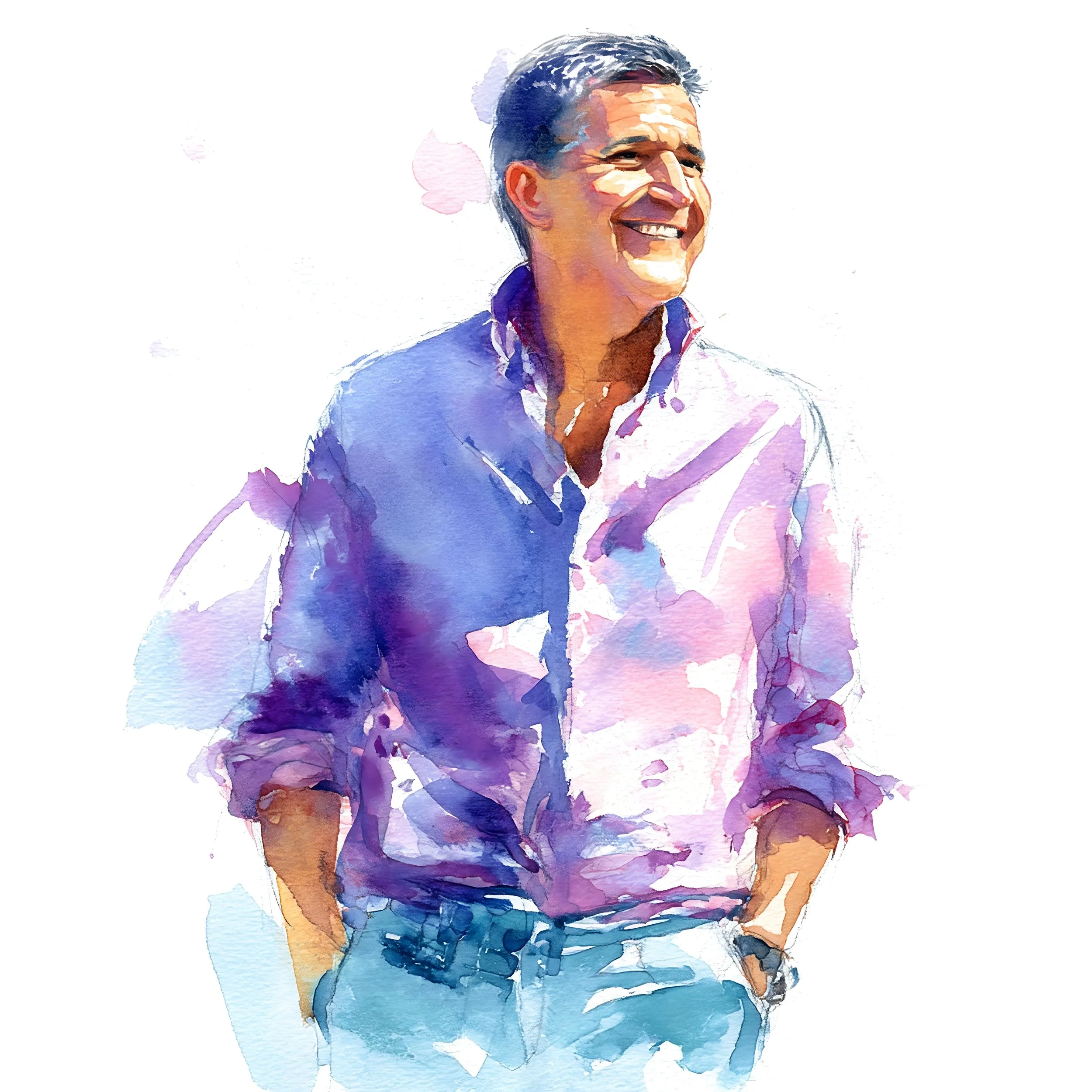
Q: You’ve built and exited multiple companies across different industries, but I’d love to start at the beginning. How did your upbringing shape the way you think about work, risk and building something of your own?
A: I think my upbringing gave me a mix of independence, adaptability and curiosity. I was always drawn to the idea that life could be shaped, not just accepted. Work, to me, was never simply about security. It was about creating momentum, testing ideas and seeing whether you could bring something into the world that did not exist before.
Risk was part of that early wiring. Not reckless risk, but the understanding that if you want an uncommon outcome, you usually have to tolerate uncertainty. Building something of your own is both a practical and psychological act. It requires a willingness to bet on your instincts before the evidence is complete.
Q: Curiosity is often an underappreciated driver of success. How has curiosity shown up in your journey, and how has it influenced the kinds of opportunities you’ve pursued?
A: Curiosity has probably been the through-line more than anything else. I’ve always been interested in how industries work, how people behave, what motivates them, and where change is coming from before it becomes obvious.
That curiosity has taken me into different sectors, but the pattern is consistent: I’m drawn to spaces where something important is shifting and where there is an opportunity to reframe the conversation. Curiosity is what keeps you open long enough to see what other people miss. It helps you ask better questions, and in business, better questions often matter more than quick answers.
Q: You’ve mentioned not just the companies that exited, but also the ones that didn’t. What did those experiences teach you that success alone couldn’t?
A: Failure teaches you proportion. It strips away vanity and forces you to confront what was real and what was wishful thinking. Success can be a poor teacher because it often flatters your judgment. Failure is much less generous.
The companies that did not work taught me resilience, timing, humility and the importance of understanding human behavior, not just product or market logic. They also taught me that endurance is underrated. If you stay in the game long enough, learn honestly, and adjust without losing conviction, those difficult chapters become part of your advantage.
Q: How do you personally define success today, and has that definition evolved over time?
A: It has definitely evolved. Earlier in life, success had more to do with proving something — building, winning, exiting, achieving external markers. Today, I think of success more in terms of alignment. Are you building something that matters? Are you doing it with people you respect? Are you creating value that lasts beyond the immediate transaction?
I still care deeply about outcomes. I’m an entrepreneur; I believe in performance. But success now includes meaning, durability and the quality of the story you are living, not just the score at the end of the quarter.
Q: At this stage in your career, what does legacy mean to you? When did that concept become more central to how you think about your work?
A: Legacy used to feel abstract to me. Now it feels immediate. At a certain point, you begin to understand that memory is fragile, stories disappear quickly, and so much of what makes a person who they are can be lost within a generation or two.
That realization made legacy feel less like vanity and more like stewardship. Legacy is not just what you leave behind in terms of assets or accomplishments. It is what remains emotionally, culturally and relationally. It is what people can still access, feel and learn from when you are no longer physically present.
Q: There’s often a tension between technology and humanity, especially with AI. What drew you to explore legacy through a technological lens?
A: I don’t see technology and humanity as opposites. I think the best technology amplifies what is most human. AI, at its best, can help us preserve voice, memory, personality and context in ways that were not previously possible.
What drew me to this space was the sense that we are living through a moment when technology can either flatten human identity or deepen it. I’m much more interested in the second path. If used thoughtfully, AI can help families preserve wisdom, maintain continuity across generations, and create living access to stories that would otherwise vanish.
Q: Reflekta is a fascinating concept—using multi-agent AI to transform memories, media and personal traits into dynamic digital characters. What was the insight or moment that led you to build this, and how do you see it changing the way we think about memory and connection?
A: The insight was simple but profound: people do not just lose loved ones, they lose access to their voices, their stories, their way of seeing the world. We inherit fragments — a few photos, some videos, scattered anecdotes — but the living texture of a person often disappears.
Reflekta was born from the belief that this should not be inevitable. We now have the ability to preserve and organize memory in a way that is interactive, relational and enduring. That opens the door to a very different relationship with family history, identity and grief.
I think it changes the conversation by shifting memory from static archive to living connection. Instead of preserving only records, we can preserve presence. That has implications not just for families, but for education, storytelling, cultural preservation and how we understand continuity between past and present.
Q: As you think about the future, both for Reflekta and more broadly, what kind of mark do you hope to leave, not just as an entrepreneur, but as a storyteller of human experience?
A: I hope the mark is one of meaningful connection. As an entrepreneur, I want to build things that matter and that endure. But beyond that, I want to contribute to a broader understanding that human experience is worth preserving — not in a sentimental way, but in a deeply practical and cultural one.
Stories shape identity. Memory shapes belonging. If Reflekta can help people feel more connected to their families, their history and themselves, then that is the kind of impact I would be proud to leave behind.
I would hope to be seen as someone who tried to use technology not to distance us from our humanity, but to bring us back to it.