
Rooted in heritage: Dino Altomare’s journey through wine, family, and legacy
By Kristen Oliveri
Every so often, I get to sit down with someone who reminds me why I fell in love with storytelling in the first place. Dino Altomare isn’t just a close friend — he’s also the Director of Education at Banfi Vintners, a fourth-generation family business that’s as rich in heritage as the wines it produces.
In our conversation, Dino shares the “why” behind his journey into the world of wine, the pride he takes in his Italian-American roots, and how storytelling, much like winemaking, is about connection, patience, and passion.
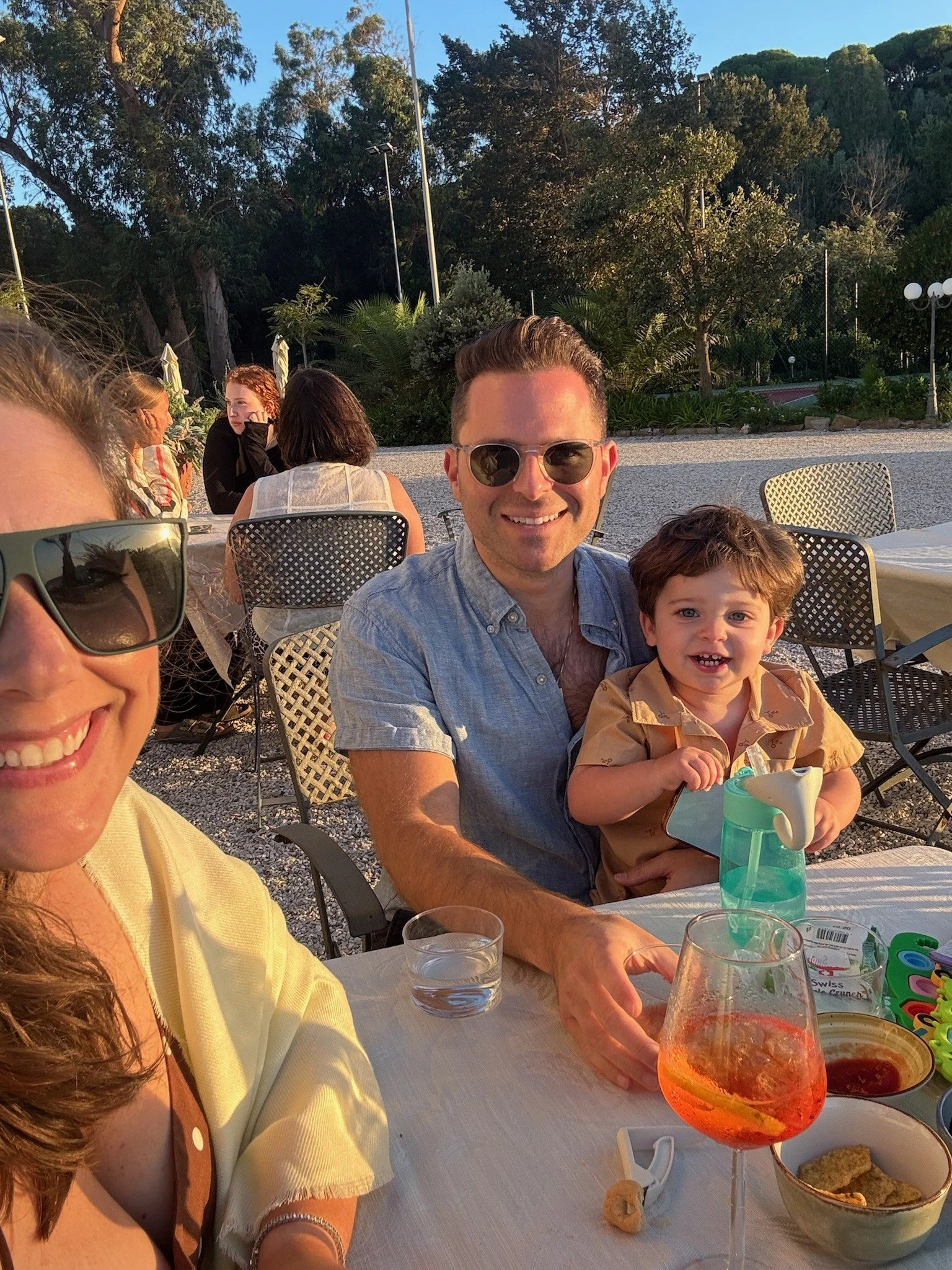
Q: Dino, I’ve known you personally for a long time, but one moment that has always stayed with me is the first time we met: you wheeled in a bag filled with delicious cheeses and several wines to pair with them. From that moment, I knew we’d be friends for life. For readers who haven’t had the pleasure of knowing you personally, can you share your journey into the world of wine? How did you fall in love with it?
A: I don’t think my path into wine was ever a conscious decision — like so many in this industry, it felt more like the natural course of my life. Ironically, I’m writing this on a train from Rome to Grosseto, heading back to Montalcino after seeing my family off. The scenery outside the window feels like a metaphor for my journey: it’s the landscape that defined my youth.
I was fortunate to spend summers in Italy at our family home in Assisi, though as a child I couldn’t fully appreciate how special that was.
The same goes for the traditions my parents and grandparents carried on in the U.S., even while working tirelessly to give us greater opportunities. One of those traditions was making wine every fall. For me as a kid, it was magical mostly because it meant late nights with my cousins — far later than we’d normally be allowed to stay up.
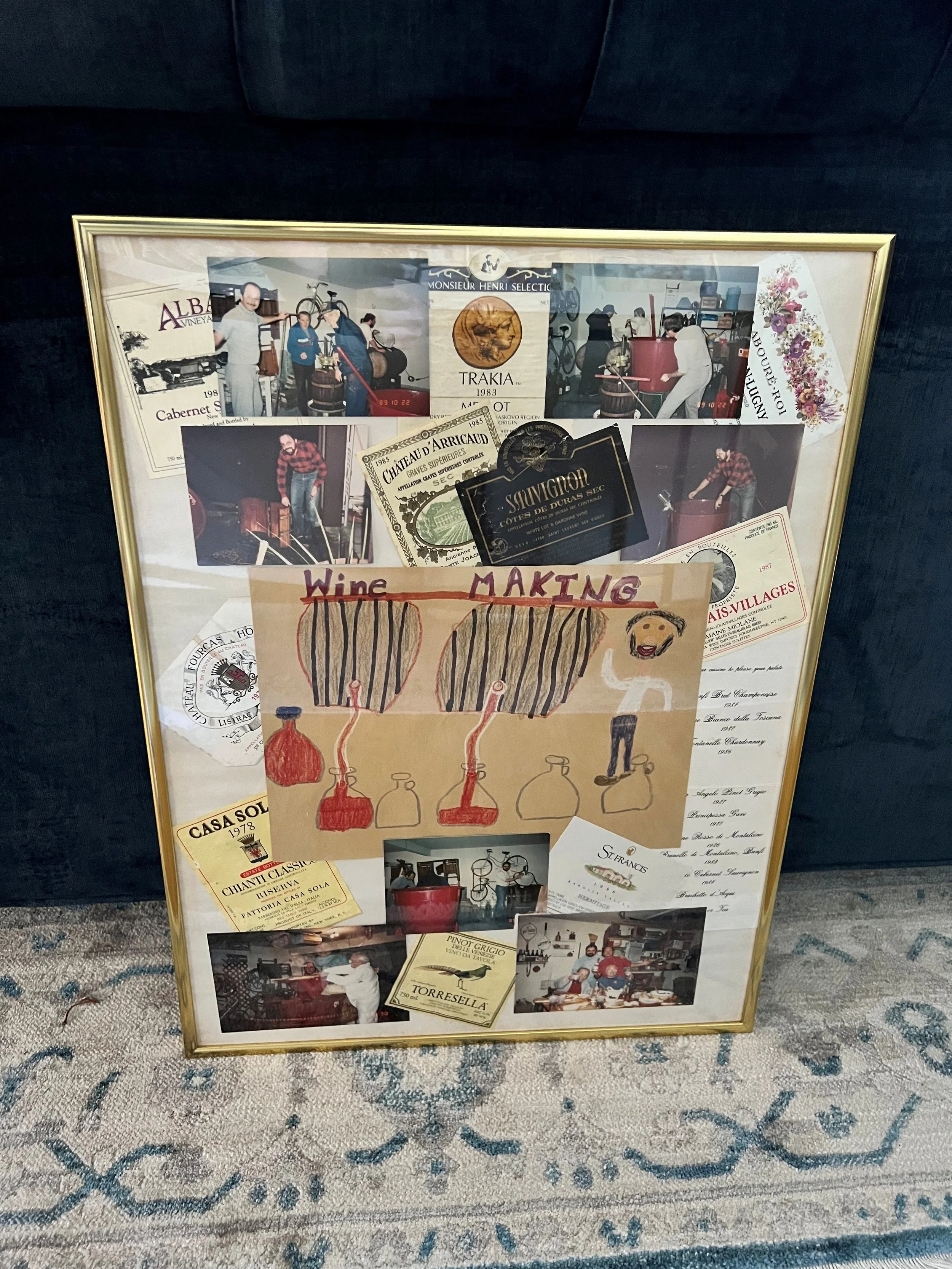
A pivotal moment came in elementary school when I was assigned a project to showcase a favorite family tradition. I proudly walked in with a poster covered in wine labels, wine dinners, and drawings of our annual winemaking. Many of those dinners, I later realized, were from Castello Banfi. That afternoon, my parents got a call from the principal, deeply concerned about what I had shared. Their surprise at the school’s reaction made me realize: what was second nature to us was, in fact, something very different and significant. That was the first time I understood just how special wine was — not just a beverage, but a bridge between cultures, heritage, and identity.
Years later, I had my true “aha” moment in Tuscany. I couldn’t have been more than ten when my dad encouraged me to try a sip of Brunello di Montalcino with my steak. That single sip changed everything: suddenly the food tasted different, better, alive. It was the first time I felt the transformative power of wine, and I was hooked.
From there, the path unfolded in its own way. I studied business, finance, economics, and marketing, with a minor in music — which, naturally, led me into a career in wine. I began with an internship at Banfi that turned into a full-time role on the Brand Team. From there, I fell in love with PR and eventually moved into Education, where I found my true calling: storytelling.
Even with a healthy dose of roles in sales management and business development in the mix, for me, it has always been about the people — the humble, passionate people behind each carefully crafted bottle, and the joy of sharing their stories with others. Whether I’m speaking with trade partners, consumers, journalists, or students, I feel privileged to help connect people through wine. Looking back, I can’t imagine doing anything else.
Q: Today, you serve as Director of Education at Banfi Vinters, a respected, multi-generational Italian family business. What have you learned from the family about building a business that can thrive for generations?
A: That’s such a great question - there are countless lessons I’ve learned from the Mariani family, but a few stand out for me. I’ve been lucky enough to work with the Mariani family through not only tremendous changes in the W&S industry, but also an evolution of Banfi over the years.
First and foremost is authenticity. It’s a word that gets overused, but in its truest sense it means honesty and integrity. The Marianis have always been clear about who they are, their vision, and recognizing their strengths but also opportunities for growth — and they communicate that openly with colleagues and the industry, even when it’s not the easiest path.
Sometimes vision evolves, and that’s necessary in an industry as dynamic as ours. But what doesn’t change is the commitment to transparency and values. As the fourth generation of family leadership prepares to begin their journey in our industry, that balance of boldness and staying true to core principles is what continues to set Banfi apart.
Second, I’ve learned the importance of taking calculated risks, and being prepared to pivot. The company itself was founded in 1919, during Prohibition — a risk in and of itself. Later, choosing to import Italian wines to the U.S. when the market was still nascent, deciding to invest in Montalcino and pioneer groundbreaking research in an undervalued region, and most recently Cristina Mariani’s decision to expand our portfolio while remaining family-owned during a time of uncertainty — all of these were bold choices. There’s a pioneering spirit woven into Banfi’s culture, one that carefully weighs risk against reward, and more often than not, gets it right, thanks to the ability to be nimble.
Third, sustainability is non-negotiable. And that means both environmental stewardship and business strategy. In winemaking, the Marianis have always believed in treating the land, their colleagues, and community with respect, ensuring what we pass on is better than what we inherited.
In business, the same principle applies: resist shortcuts, focus on longevity. I remember John Mariani often saying, “Everyone can play the price game, but nobody ever truly wins.” That perspective has been invaluable in teaching me how to think long-term.
Finally, education. The family has always believed that “all ships rise with the tide.” From sharing decades of research with the global winemaking community, to building educational platforms, to supporting hospitality universities and charities through the Banfi Vintners Foundation, their commitment to raising the bar for the entire industry is remarkable. It’s not just about building a business — it’s about building a legacy that uplifts others.
Q: Let’s talk spirits. Banfi has been expanding into this space with Boatyard Distillery Gin, an unexpected but exciting move from Ireland (not Italy!). Tell us more about the brand, and why the art of crafting the perfect martini will never go out of style.
A: I couldn’t be more excited to be working with Boatyard. When we set out to bring a craft gin into our portfolio, it had to check all the boxes: sustainability, authenticity, and an ethos aligned with our own. Boatyard delivers on all counts.
It’s Ireland’s first B-Corp–certified distillery (and also certified organic), and the first legal distillery in Fermanagh since 1890. After a successful career in Scotch, founder Joe McGirr returned home in 2016 to build not only one of the world’s great gins — designed with martinis in mind — but also to create meaningful jobs for the local community. The distillery sits on the banks of Lough Erne, accessible by boat or car, surrounded by stunning natural beauty that reinforces the importance of sustainable practices.
Boatyard Gin takes a purist’s approach to London Dry, with juniper at both the start and end of the distillation. The result is a spirit that’s citrus-forward, incredibly smooth, and a real standout for gin lovers. Sustainability runs through everything they do, from using recycled glass and sustainably farmed corks, to offering local refill programs, donating lemon fruit of our hand-peeled organic lemons to restaurants, and even upcycling spent botanicals into chocolate bars that pair beautifully with cocktails.
And of course — the martini. To me, a martini will never go out of style because it’s more than just a cocktail; it’s a ritual. Every choice — spirit, vermouth, garnish — is personal, which makes it timeless. The martini has evolved with culture, from its 19th-century origins to its Art Deco heyday, inspiring countless offshoots from the Cosmopolitan to the Espresso Martini. But its essence has never faded, and instead, has really transcended time and trends. And a Martini is the ultimate test of a great gin: you can’t hide behind a martini. If it shines there, it will shine in anything.
Q: Your role has taken you around the globe learning, tasting, and teaching others about wine. What are some of your favorite wine regions and why?
A: That’s such a tough question — there are so many regions I love for different reasons. Of course, Italy holds a special place in my heart. Its twenty regions each tell a completely different story, from the alpine freshness of the north to the sun-soaked coastlines of the south. I’m especially drawn to those mountainous and coastal areas — the diversity is incredible for such a small country. And I think the range of high-quality, traditional-method sparkling wines emerging from northern Italy, particularly the Alta Langa DOCG in Piemonte, is something everyone should be watching.
I’ve also spent a bit of time in South America, and I’m constantly inspired by Chile. It’s one of the few countries where you can experience such diversity from north to south and east to west. There is so much value to be found Chile, as well as industry-leading innovation and a real focus on sustainability.
And then there’s England — which still surprises people when I mention it. The traditional-method sparkling wines from the southern regions such as Sussex, Hampshire, and Kent are absolutely world-class. With the same chalky soils found in Champagne, they’re producing wines of real finesse and elegance.
But I’ll admit, I’m a bit of a champion for the underrepresented. I love looking for lesser-known gems like Xinomavro from Naoussa in Greece, dry Furmint from Hungary, or even San Marco — a crossing of Teroldego and Lagrein — from New Jersey’s Outer Coastal Plain AVA.
I’m really fascinated by the many emerging regions that might once have been overlooked, but are now producing truly exciting wines thanks to innovation and shifting climates.
Wine is always evolving, and that’s what keeps it endlessly interesting — there’s always something new to discover, often in the most unexpected places. (I’ll save my stories about Cabernet Sauvignon from the Himalaya Mountains and my brush with death there for another time!).
Q: When you’re taking a break from wine, what do you reach for?
A: When I’m not drinking wine, it really depends on the mood, the day, or even the weather, but regardless, I usually find myself chasing those bright or bitter flavors. A classic Martini is hard to beat – though if I’m feeling mischievous, I’ll go for a Gibson. I also love a bright hoppy IPA, and if I want something with a little gravitas, it’s a Manhattan… though I like to slip in half an ounce of amaro, just to keep things interesting. Clearly, I have a type — bitter and complex. I suppose that says something about me! But they really wake up the palate and reset your senses in a refreshing way.
Q: Finally, I can’t wrap up without touching on the idea of “dinner with friends” or in Italian, cena con amici. If my family were coming over for dinner with yours, what would you serve us?
A: For me, it’s all about simple, fresh ingredients treated with a light hand — and lingering over the meal without a schedule or rush. I’m nostalgic for those long Sunday dinners I loved as a kid, the ones that stretched from midday to night with breaks for espresso and bocce, and not a cellphone in sight.
We’d start with some homemade bread or focaccia alongside cured meats, cheeses, olives, and giardiniera — I always keep these on hand, since I love the idea of an antipasto that comes together from whatever’s in the fridge. Depending on the season, maybe a fresh pesto from my garden basil in the warmer months, or a slow-cooked ragù when the weather turns cool. If it’s last-minute, a classic amatriciana is always a crowd-pleaser.
For the second course, I’d look to whatever vegetables tickle my fancy at the farm, and use that to decide on a fish or meat, simply grilled or roasted, rounding it out with a simple fresh salad.
Dessert would be fresh fruit, perhaps with a little cheese, and no meal is complete without espresso, biscotti, and a digestivo.
And of course, we’d work our way through more than a few cocktails and wines along the way, each one chosen to highlight the food and the moment.
For me, meals like this aren’t about formality — they’re about connection. Good food, good wine, and good company are the simplest recipe for joy.
Something tells me we’ll go MUCH deeper into this at some point, so we can talk exact dishes and recipes.