
Inside the movement to rebuild women’s health — with Jodi Neuhauser and Rachel Braun Scherl
By Kristen Oliveri
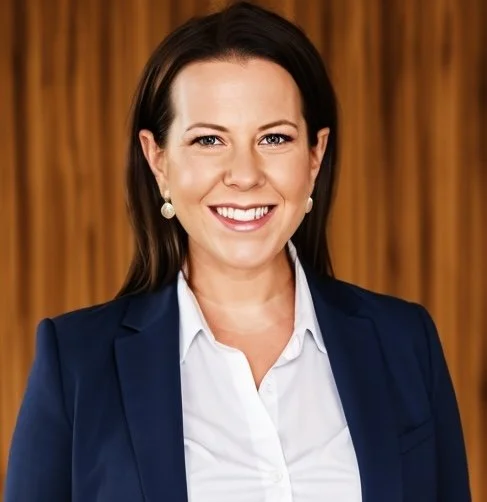
The future of women’s health is being built by leaders who understand both systems and scale, and who are no longer willing to wait for inclusion.
Jodi Neuhauser is a three-time venture-backed founder and CEO focused on rebuilding the business and policy infrastructure of women’s health. Over her career, she has led high-growth B2B and B2C companies, raised more than $100 million in capital, built teams from early startup to global scale, and launched products that have generated over $1 billion in new business.
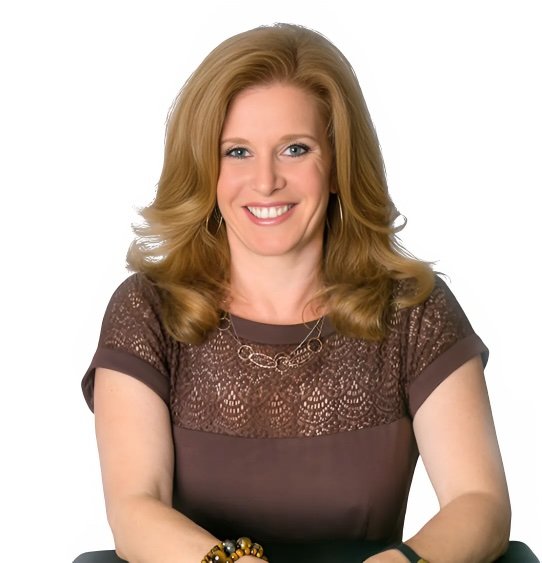
Rachel Braun Scherl, managing partner of SPARK Solutions for Growth, is a seasoned business builder, marketing strategist, author, and longtime leader in women’s health. Her work spans sexual and reproductive health — from menstruation through menopause — helping companies grow with both commercial rigor and cultural relevance.
Together, they have united through 51& around a shared mission: to fund, connect, and scale a new foundation that supports a system where women are no longer an afterthought, but fully included.
In this Wealth Reimagined interview, we explore what it takes to build real infrastructure for women’s health, and why progress requires both capital and conviction.
Q: What pulled each of you into women’s health, and when did you know this work was personal?
A: Jodi: For me, it started as a career, but very quickly became a purpose. I spent years building companies across healthcare and kept running into the same pattern: women were everywhere—patients, caregivers, workers—yet consistently left out of the systems that shaped their lives. Then I became a mom, navigated my own fertility challenges, and watched women I love hit the same walls. At some point, you stop calling it coincidence and start calling it what it is: structural neglect. That’s when this work stopped being professional and became deeply personal.
RBS: I actually entered the space because I saw the huge economic opportunity. A venture capitalist showed me a business plan for a company that had a product that provided arousal, desire and satisfaction for women of all ages and life stages. My long-time business partner and I ultimately bought the asset, Zestra, and built a company around it. The one we were presented with, Zestra, had clinical demonstration, initial traction and a huge playground to play in. Within months, it became clear that this was not an ordinary business. The structural impediments related to raising capital and accessing media channels meant that business as usual would not be sufficient. When I saw roadblocks popping up at every turn, it became a mission - my goal was to figure out how make sure important conversations about women’s health were being had, that products were getting launched and people were getting educated about their options.
Q: How did your paths cross, and what made you say you needed to build something together?
A: Jodi: We met the way many women in this industry do—through the quiet but powerful backchannel of women making sure other women don’t do this work alone. The spark was lit years ago after a women’s health conference in Boston. I shared what I was thinking about building, and Rachel immediately offered her expertise.
RBS: Following that auspicious meeting, we stayed in each other’s orbit, and kept finding ourselves in the same conversations about the same systemic problems. Over time it became obvious: we share the same instincts, the same fire, and the same belief that women deserve more than incremental change.
The moment we decided we needed to build something together wasn’t dramatic — it was almost matter-of-fact. We were on a call talking about all the gaps no one was addressing at scale, and Jodi said, “We could fix this if we had everyone in one room and one engine behind it.” And I replied, “Then let’s build the room and the engine.” When you get to know Jodi and get to work with her, you would follow her into a burning building and know that you will come out in one piece. Could we have done it on our own, maybe? But could we do it faster, better and more effectively if we did it together? ABSOLUTELY!!!!
Q: In one sentence, what is 51& and why does it need to exist right now?
A: RBS: 51& is a tech-enabled health care navigation system that saves you time, money, and aggravation. Supported by a membership model, 51& unites our dollars, our community, and our financial power to find solutions in women’s health to build a system that would better meet the needs of the constituents - consumers, patients, health care practitioners, payors and investors.
Jodi: 51& is a member-powered economic engine built to mobilize women and allies into a coordinated financial and civic force—because real change in women’s health only happens when collective influence is organized and deployed at scale. This creates the solution to a women’s health system that remains underfunded, fragmented, and structurally misaligned with the needs of women.
Q: You talk about combining women’s voices, dollars, and voting power. What does that actually look like in action?
A: RBS: For us, it means moving women from being participants and sometimes even victims in the system to being a force that shapes it. When we talk about combining voices, dollars, and voting power, we’re talking about building coordinated influence at a scale women have never had in healthcare. We translate lived experience into leverage to make our voices heard to drive change. We gather the stories, data, and patterns from our community — whether it’s diagnostic delay, maternity coverage, menopause care, or fertility access — and transform that into clear priorities that industry, payers, policymakers, and media cannot ignore. We clearly communicate the economic impact on society and families and companies of business as usual. One woman telling her story is moving. Ten thousand women telling the same story - is a movement.
Jodi: In practice, it starts with pooling dollars. Every member contributes $100 annually, and instead of that being symbolic, we aggregate it into catalytic capital. Thousands of individuals become a multimillion-dollar force funding research, reimbursement reform, data infrastructure, and companies. Money changes what gets built, who gets funded, and what gets prioritized—and for the first time, women are deploying it collectively. When we combine these points of leverage — dollars, voices, and votes — we stop playing defense. We start taking an active role in shaping a healthcare system that reflects the needs, priorities, and power of the 51% of the population it’s supposed to serve.
RBS: Women have voting power, but we have not always used it in a coordinated way. Women already make up the majority of voters in this country. Through 51&, we can use our combined influence to share knowledge, build solutions, change policy, and mobilize around issues that determine health outcomes. Through 51&, we can use our voting power to create shared knowledge, highlight which candidates are championing women’s health, and mobilize around the issues that determine health outcomes. Not partisan, not Democratic or Republican - just pro-women’s health - better and earlier diagnosis, appropriate interventions and better health outcomes.
Q: What is the biggest gap in women’s health today?
A: RBS: The biggest gap is economic. Women’s health has never been treated as a priority worth investing in, reimbursing, or researching at scale. That’s why we still don’t understand the most fundamental science or why maternal health outcomes are worsening, and why women wait years for diagnoses and spend more of their lives in ill health. Until we make women’s health financially undeniably beneficial — for payers, for policymakers, for investors, for healthcare practitioners and for industry — we will continue to have insufficient solutions to systemic problems.
Jodi: This is fundamentally a market failure, not a lack of desire, innovation or expertise. The biggest gap is not just the lack of investment, but the absence of coordinated economic power. Women already spend, participate, and engage across the healthcare system, but our dollars, data, and demand remain fragmented—making women’s health easy to deprioritize despite its scale. Until that economic participation is organized and made visible, the system has no incentive to change.
Q: You describe 51& as turning community, data, and influence into impact. What is an example that shows that flywheel working?
A: Jodi: Our reimbursement work is a clear example. The community identified maternal health reimbursement as a top barrier. We aggregated data from hundreds of stakeholders, then convened payers, clinicians, policymakers, and innovators at the first-ever Women’s Health Reimbursement Summit. That work is now shaping policy proposals and payer conversations nationally in the hall of Congress and regulators. The flywheel is simple: community identifies the pain, data clarifies the problem, and collective influence drives action.
Q: Every founder brings a superpower. What are yours, and how do they complement each other?
A: Jodi: Rachel’s superpower is a deep understanding of the industry, ability to build partnerships, finding where the money is and building collaborative efforts.
RBS: Jodi’s superpower is seeing the whole system — connecting the dots across policy, reimbursement, research, community, and product. She can take a messy landscape and turn it into an executable plan with momentum. We combine our strengths with clear views to vision, structure, speed and staying power. One of us pushes the frontier; the other ensures it becomes real. We share a no-nonsense, get stuff done, eye on the prize, competitive drive to accomplish our objectives.
Q: What is the one thing in women’s health that absolutely must change, and who needs to push for it?
A: Jodi: What must change is how participation becomes power. Participation without structure doesn’t produce influence, and scattered efforts don’t drive change—institutions do. Women and their allies need ongoing efforts so pressure is continuous, coordinated, and capable of outliving any single campaign, crisis, or news cycle. Women need to push change for themselves — joined by clinicians, founders, investors, and policymakers who understand that women’s health is not a niche issue; it’s the backbone of our economy and our society.
RBS: When women organize their dollars, data, and civic power - and clearly communicate the economic and societal impact, they shift the center of gravity. That’s when the system finally changes - and has the potential to meet the needs of the people who rely on the system. The one thing that must change is who holds power over the decisions that shape women’s health — what gets researched, reimbursed, covered, and prioritized. For too long, women have been the majority of patients but a minority of decision-makers. That imbalance is the root of the delays, dismissals, and systemic gaps women experience every day.
Q: For the women reading this, what is one action they can take today to advocate for better outcomes in their own health journey?
A: Jodi: Share your story. Be your own health advocate. Start by advocating for yourself. Document your symptoms, questions, and care history. Trust your instincts. Go into appointments prepared, ask for second opinions, and don’t navigate your health alone. Advocacy doesn’t start in Washington—it starts in the exam room.
RBS: As the legendary tennis pro Arthur Ashe said, “Start where you are. Use what you have. Do what you can.” Today, this week or this month - take a single action to educate yourself on your health and/or the health system. Read about breakthrough medications, dive deeper into your insurance plan to understand your options, find practitioners who listen, and share what you are learning. Be a voice in catalyzing these conversations. And of course, we would love you to join 51&.