
Leaving a Fingerprint: Jose Canero on Real Estate, Resilience and the Miami He Calls Home
By Kristen Oliveri
For Jose Canero, real estate has never been simply about the transaction. The Miami-born developer grew up learning the business alongside his father, began his career just as the 2008 financial crisis reshaped the market and has since built The Canero Group into a real estate brokerage and development firm with more than 50 associates.
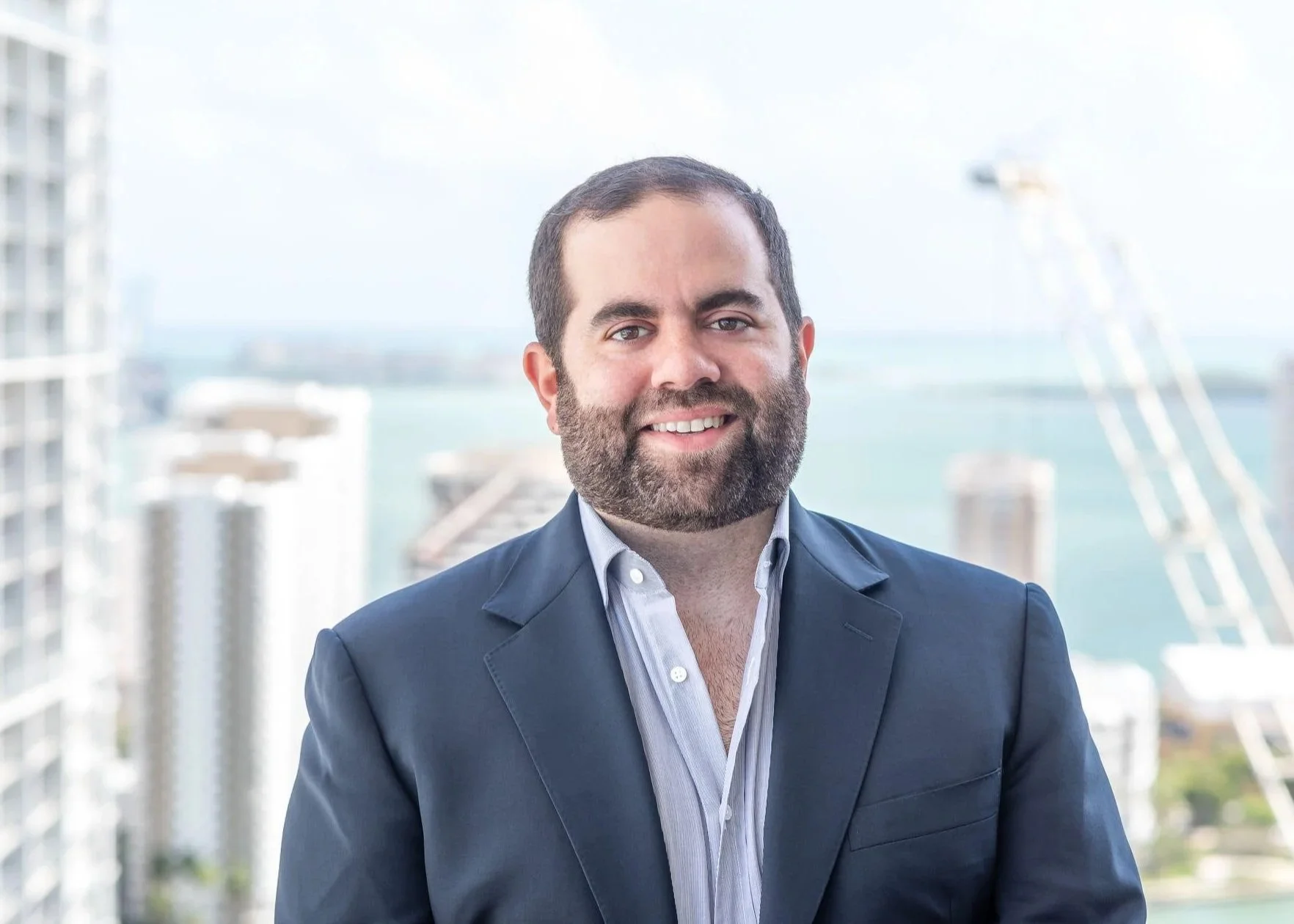
Today, his work is deeply connected to the city he has watched evolve around him.
In this Q&A with Wealth Reimagined, Jose shares how those early experiences shaped his approach to risk and resilience, why he believes development should add to the character of a neighborhood, and what it means to build something that leaves a lasting fingerprint long after the deal is done.
Q: Real estate is often viewed through the lens of transactions and returns, but you describe it as leaving a fingerprint on the world. How do you define meaningful development?
A: For me, meaningful development isn't measured only in cap rates and closing statements, it's measured in what's still standing, and who's living in it, twenty years from now. I came up in the nightclub world before I came up in real estate, and that taught me something people miss, a space either has intention behind it or it doesn't, and people feel the difference even if they can't name it. When I look at a piece of land in Miami, I'm not just asking what the zoning allows, I'm asking what this neighborhood actually needs, and whether what I build adds density and life to it, or just extracts value from it. A transaction ends at closing. A fingerprint is what the block looks like after you're gone.
Q: You’ve spoken about following in your father’s footsteps and growing up surrounded by architectural plans and drawings. What do you think you inherited from him beyond the business itself?
A: More than the business itself, I think I inherited his ethics. My father drilled into me that you do right by people and treat everyone the way you'd want to be treated. He also taught me to help people even when you're not in a position to. Especially then, actually, because that's when it means something.
Q: Miami has changed dramatically over the last two decades. As someone born and raised there, how has your relationship with the city evolved as both a resident and developer?
A: Growing up here, 'going out' basically meant one thing:, you went to Miami Beach. That was it. Now, on any given weekend, my wife and I are choosing between Wynwood, the Design District, Coconut Grove, Coral Gables, Brickell, downtown, each one with its own identity, its own crowd, its own reason to go. That transformation, watching a single city fracture into a dozen distinct neighborhoods each with real character, has been incredible to witness as a resident. As a developer, it's even more interesting, because it means the opportunity isn't concentrated in one or two 'hot' zip codes anymore, it's everywhere. The more identity a neighborhood develops, the more potential I see in it, because now I'm not just building a building, I'm adding to something that already has a personality. My job is to build things that fit that personality, not flatten it.
Q: You began your career at just 18 years old and later navigated opportunities that emerged after the 2008 financial crisis. What did those early experiences teach you about resilience, timing, and risk?
A: I graduated high school in 2006, right as the market was about to fall off a cliff, so I essentially started my career watching empires that took decades to build disappear in months. It was painful to watch, especially seeing friends and family lose everything. But it taught me discipline early, never over leverage, never get ahead of yourself, because size doesn't protect you if you've overextended. It also taught me something counterintuitive about timing, you can't time the market, and anyone who claims they can is just guessing. But timing still matters enormously, in 2008 to 2010, I watched properties sell for pennies on the dollar, and depending on which side of that deal you were on, it was either the worst timing of your life or the best, the seller caught at the worst possible moment, the buyer walking into the best one. In hindsight, starting my career at rock bottom was the best thing that could've happened to me, I never got to develop bad habits from an easy market. And it left me with one belief I still hold, if a property is in the right location, it will always come back, even if it takes a decade. So you weather the storm, you don't sell into it.
Q: I often explore the idea that true wealth extends beyond financial capital. What role do community, beauty and livability play in the projects you choose to pursue?
A: I've never been in business to lose money, nobody is, and I won't pretend otherwise. But I've also learned that the projects I'll never regret are the ones where I gave something back to the community, where I left a fingerprint I'm proud of, not just a return on a spreadsheet. That mindset actually goes back to 2008, I watched what happens when people only chase the number, and it taught me that a project built with real quality and livability in mind tends to be the one that holds its value longest anyway. So beauty and livability were never in tension with returns for me, they're what protects them. That's why I focus so much on quality, on the things the end user won't even notice until they've lived in the home for a year or two, long after it's sold and technically 'not my problem' anymore. A lot of developers skip those details because nobody catches it at closing. I don't want to build that way. I want the person who buys from me to actually be happy living there, that matters more to me than being able to walk away clean the day the deal closes.
Q: You’ve shared that you intentionally try to preserve and plant trees throughout your developments. In a world focused on speed and scale, why does that detail matter to you?
A: There are really two reasons this matters to me. First, I genuinely care about the environment, and I don't buy the idea that development and mature trees have to be in conflict, they don't. Miami has lost a lot of its tree canopy over the years to growth, and I don't want to be part of that problem, I want to be part of reversing it. Second, and this might surprise people, it's just good business. Landscaping is usually one of the last phases in a project, so when developers go over budget, I believe it's often the first thing they cut back on. I think that's backwards. Mature trees and thoughtful landscaping are what actually give a home character, walk through any of the most desirable neighborhoods in this city, or anywhere, and it's almost always the tree canopy that makes the street feel special, not just the architecture. And it's not expensive or complicated to get right, it just requires caring enough to prioritize it.
Q: Your work spans luxury residences, multifamily development and large-scale assemblages. How do you balance growth and ambition with protecting the character and soul of a neighborhood?
A: The honest answer is that I don't think I have to choose between growth and preserving a neighborhood's character, because Miami is made up of so many genuinely distinct neighborhoods, each with its own zoning, its own density, its own personality. My job is to figure out what each one is actually asking for and build within that, rather than importing the same playbook everywhere. A project that makes sense in Downtown would be completely wrong in Coconut Grove, and vice versa, so ambition, for me, means finding the right opportunity in the right neighborhood, not forcing density where it doesn't belong. That's especially true with assemblages. Most of the buildings I'm consolidating were never architecturally distinctive, simple, practical structures that housed a lot of people well over the years, even if they weren't designed with much character. Assembling them gives me the chance to honor that stretch of the block with something that finally matches the quality of what's grown up around it. As long as I'm listening to what a neighborhood already is instead of overwriting it, I think there will always be room to grow here.
Q: What’s a project or development that felt especially personal to you, and why did it leave such a lasting impact?
A: The one that stays with me is the Chateau Grove assemblage. When we finished buying out all the individual units last year, well above market value, the owners actually threw us a party. I've closed plenty of deals where a seller shakes your hand and says thank you, and that's the end of it, this was nothing like that. I had people coming up to me in tears, hugging me, telling me their personal stories, telling me what that sale actually meant for their life. It's easy to think of an assemblage as just a transaction, buying units, closing paperwork. That day reminded me it's not. For a lot of those people, it was life changing money at exactly the right moment, and being able to be part of that, to see it land that way instead of just wiring funds and moving on, is one of the most rewarding things I've experienced in this business.
Q: Outside of business, where do you feel most grounded or inspired?
A: Outside of work, I've got a genuine love for wine that probably surprises people who only know me as 'the real estate guy.' I love aged wines especially, there's something fascinating about holding a bottle that's decades old, learning the history behind it, what was happening the year those grapes were harvested, knowing that liquid has been carefully stored all this time just to finally be enjoyed at the right moment. It's incredible when you really think about it. It's also the perfect contrast to how fast everything moves in business, collecting and enjoying wine forces a kind of slowness, a disconnect, that I don't get anywhere else. And it's become something I share with friends, some of my best moments of actually unplugging happen over a good bottle, with good people, no business talk at all.
Q: I always love ending with this. What’s a favorite book that has inspired you, whether personally, professionally or philosophically, and what stayed with you long after reading it?
A: I actually came across Antifragile by Nassim Taleb fairly recently, and it really resonated with me. The core idea is that some things don't just survive stress and hardship, they come out stronger because of it, the way a muscle grows back tougher after you tear it down. Reading it, I found myself relating to so much of it, thinking back to 2008 and everything since, it just made sense. There was something almost validating about it, putting language to an idea I already believed to be true from experience, without ever having a word for it.