
More Than Risk: Claudia Ramone on Building a Life of Purpose
By Kristen Oliveri
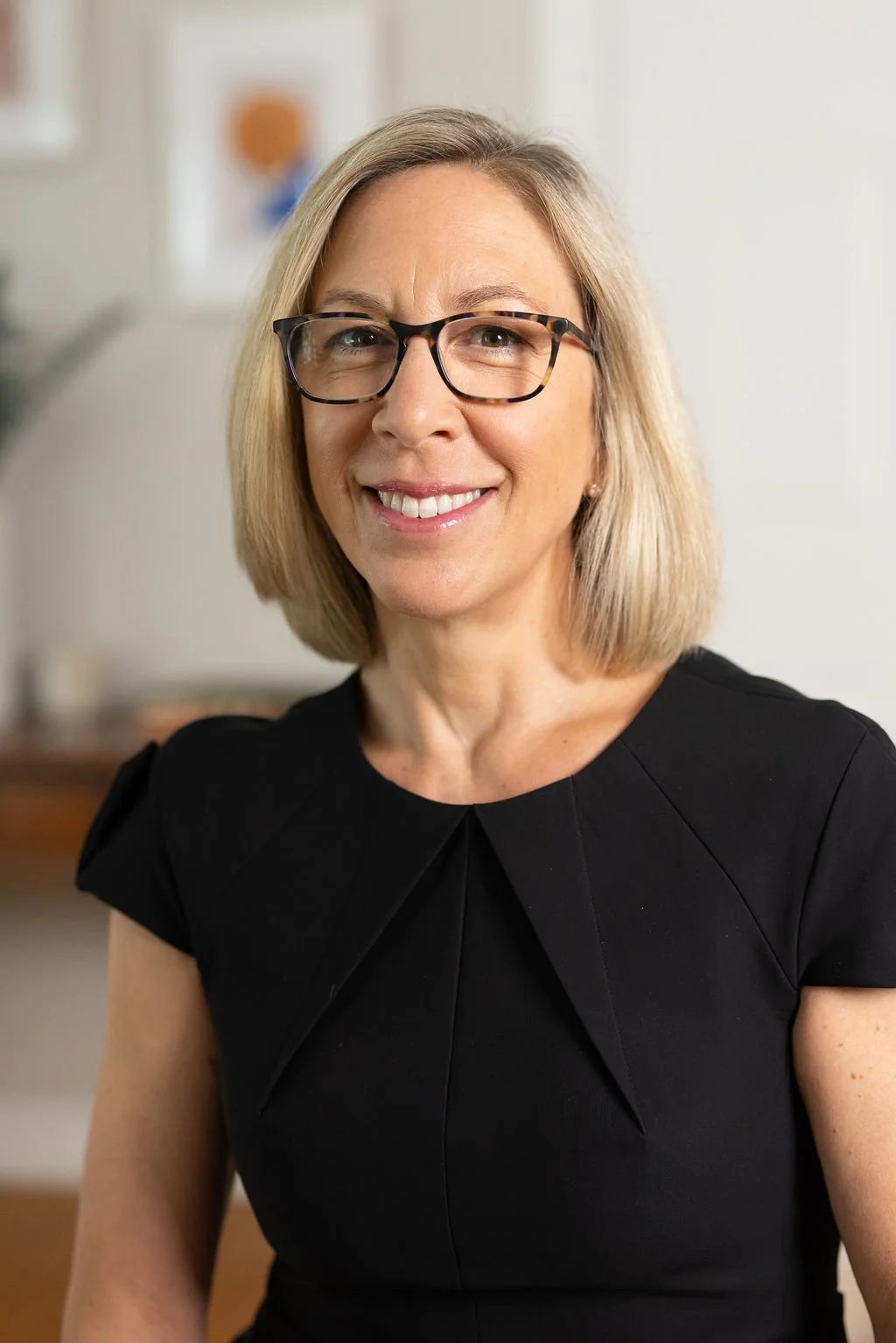
Careers rarely unfold in a straight line, and Claudia Ramone wouldn't have it any other way.
Raised on the North Fork of Long Island, Ramone has built a career by following opportunity rather than convention. Before becoming a trusted advisor to asset managers, private equity firms and other financial businesses, she worked at the French Culinary Institute and spent years in corporate sales, experiences that shaped the relationship-first approach she brings to every client today.
She's also a mother of two daughters, an advocate for financial independence and a competitive natural bodybuilder, proof that reinvention doesn't belong to one stage of life.
In this conversation with Wealth Reimagined, Ramone reflects on the career decisions that shaped her, what risk has taught her about leadership and why consistency has become the foundation for success in both business and life.
Q: Let's start at the beginning. What drew you to the world of insurance and risk management, and what keeps you excited about the work today?
A: I was actually recruited into insurance after many years in corporate sales and business development. I had spent more than 15 years building my network, and I was very nervous about how the career change would impact my professional reputation at the time.
It took me about a year in the industry to find my niche in professional lines, what is referred to as Executive Risk and Management Liability. Being in New York City, one of the finance capitals of the world, I naturally gravitated to asset management, hedge funds and private equity fund managers. In this space, reputation and relationships are key, and relationships are sticky when you do a good job.
Q: Your client base spans traditional asset managers, private equity and venture firms, as well as the evolving world of crypto and Web3. What are some of the biggest misconceptions people have about risk in these industries?
A: All of these industries tend to have challenges with reputation management in the broader public domain. Most of the time, it is the bad news that makes the headlines in asset management and crypto, like a hedge fund manager running a Ponzi scheme or a crypto token rug pull where people can lose significant sums of money.
The truth is that criminals and bad actors are in every industry. There are some extremely smart and talented individuals in these respective domains. At the same time, investors need to be educated and explicitly aware of their personal risk tolerance for financial loss. I think herd mentality impacts both of these industries in a way that can blind people to the inherent risks involved.
Q: You've spent years advising sophisticated clients on how to protect what they've built. What have you learned about the relationship between wealth and risk?
A: The best way I would describe wealth and risk is consistently uncorrelated. I have clients with incredible risk tolerance who refuse to buy certain coverage lines and choose to self-insure certain losses unless there is a mandate to buy coverage. Other managers who are barely starting out are sometimes asking how much insurance they can buy and afford.
Budget and risk appetite do not necessarily go hand in hand. It has been an interesting observation.
Q: Many of our readers work with high-net-worth individuals and families. What lessons have you learned from serving successful clients that have influenced your own approach to business or life?
A: A huge lesson would be generational wealth planning. That means talking to my kids early and often about money, savings and how to build long-term wealth, as well as assessing opportunity costs and alternative investments.
I have two daughters, and it is hugely important to my husband and me that they can be financially independent no matter what life throws at them.
Q: Cybersecurity, fraud and digital threats continue to evolve rapidly. What are the conversations family offices and business owners should be having today that they may not be having enough of?
A: Every person and business is at risk of a cyber, data or identity theft event. It can be a real headache to deal with. I think businesses of all sizes should carry cyber liability as soon as they have personal data, whether that is investor data, employee data or something else.
Policies are a lot more affordable than they were just a few years ago, and carriers offer a network of service providers that can help with cyber risk management. It is a significant risk that I do not think is taken seriously until someone goes through it and then ends up being the appointed internal cyber person to deal with the event.
Q: One of your strengths is making highly technical topics approachable. How do you help clients navigate complex decisions without overwhelming them with industry jargon?
A: The most effective way of explaining something technical is to find a relatable topic or situation the person can see themselves in. I do my best to put myself in the shoes of the manager and think about what would keep me up at night.
Is it something I can control? Is it a risk I can address with a policy or procedure? Is it a risk that comes from an outside threat I cannot control? If something happened, could the company afford to pay for the loss, or would it be better to put an insurance product behind it?
Trying to find relevance in the day-to-day has been the most effective way.
Q: As a woman working in financial services and insurance, what has your experience been like building a career in a traditionally male-dominated industry?
A: I have spent most of my career in sales in male-dominated industries. It has been my experience that if you do a good job for your client and deliver the best you can, the relationship will be a long one.
You need to find what you have in common with people more than what makes you different. Being one of the few female producers in this industry also gives me an advantage. Since there are so few women, people are more likely to remember me and what I do.
Q: We both share a belief in the power of relationships. How have networking, mentorship and community helped shape your career, and what advice would you give to younger women looking to build meaningful professional networks?
A: When I got into this industry, I knew absolutely no one. I remember spending the first two years going to every single industry event I could get into, including roundtables, sunset series and breakfast briefings, and collecting cards from every other service provider I met.
This industry is very referral-focused. Cold calling always has its place, but a warm introduction is going to speak volumes before you even get on the phone.
Building and nurturing a network is not just about making more sales. It is also about being knowledgeable about what else may be impacting the industry and being able to offer valuable introductions to your clients as well. It is at least 40% of your success, in my opinion.
Q: Outside of work, you're a WNBF and ICN Masters Bikini competitor. That's a level of discipline most people never experience. What first inspired you to step on stage?
A: Yes, now that is a story.
I have always been athletic and, through middle age, ran several marathons until my knees could not take it anymore. During COVID, I spent a lot of time focusing on weightlifting, and I reconnected with a childhood friend who now lives in Australia.
Fast forward to 2025, and I am part of Team Australia competing in natural bodybuilding competitions as a Masters Bikini competitor. It took me a few years to accept several invitations to compete. I thought, How embarrassing would it be if a client or colleague saw my photos online?
I feel like there has been a real culture shift around fitness these past few years, and I was finally ready to share what I had been quietly working on.
Q: Competitive bodybuilding is often viewed as a physical challenge, but many athletes describe it as a mental one. What has the sport taught you about resilience, consistency and overcoming setbacks?
A: It is funny because the physical part almost seems easy relative to what it means the day you step onstage in hair extensions, acrylic nails, a tremendous fake tan and a rhinestone bikini. Talk about an identity crisis.
You never think you are ready, and you always think the person next to you on stage is doing something better. But if you have a plan and follow it, you will get there.
It means taking fish and vegetables to a birthday party, getting up early to train when you do not feel like it, and staying consistent when no one else sees the work.
What it has taught me is that resilience is not always dramatic. Sometimes it is just doing the next right thing, over and over again, even when you are tired, uncomfortable or doubting yourself.
Q: Has there ever been a lesson from prep, training or competition that unexpectedly translated into your professional life?
A: Yes. I believe consistency is key.
Show up, follow through, communicate and do what you say you are going to do. Whether it is training for a competition or building a client relationship, success rarely comes from one big moment. People learn they can trust you when you are reliable, and that applies just as much in business as it does in bodybuilding.
Q: What would people be most surprised to learn about you?
A: It definitely has to be the bodybuilding. Most people know me as an insurance broker and risk advisor, so they are surprised to learn that I spend my free time training for natural bodybuilding competitions. It is definitely not what most people expect when they meet me.
Q: What would you say is your superpower?
A: My superpower is stepping into other people's shoes and seeing a situation from the client's perspective.
I had a long career before I got into insurance. I managed large teams and oversaw significant P&L responsibilities, which has helped me relate better to my clients. I am not a broker by birth, so to speak, and that background gives me a deeper understanding of what it is actually like to run a business.
It allows me to approach conversations as a business partner first and an insurance advisor second.
Q: What is the most influential book you've read, and why has it stayed with you?
A: How to Win Friends and Influence People by Dale Carnegie.
Two lessons from that book have stayed with me throughout my career. First, expect ingratitude. You can put a tremendous amount of work into a pitch, project or relationship and not necessarily receive the recognition or appreciation you think it deserves.
Second, let the other person speak as much and as long as possible. Ask questions. Listen. You learn far more by letting other people talk than by doing all the talking yourself. Those lessons have been invaluable in both business development and relationship management.
Q: When you think about a life well lived, what does that mean to you today?
A: This has definitely changed as I have gotten older. I see how quickly time has passed, and it gives me a greater sense of urgency to do the things I have put off, whether that means taking a trip, visiting old friends or trying something I never thought I could do.
If something looks amazing, gives me anxiety and makes me think I could never do it, it usually means I will ultimately do it.
Ultimately, a life well lived means spending time with the people I love, working with people I respect and doing things I never thought I could.