
By Kristen Oliveri
For more than a century, the Catena family has been shaping the story of Argentine wine, beginning when Italian immigrant Nicola Catena planted his first Malbec vineyard in Mendoza in 1902. Four generations later, Dr. Laura Catena is carrying that legacy forward.
Today, Laura leads Catena Zapata, following in the footsteps of her father, Nicolás Catena Zapata, whose pioneering work helped elevate Argentine Malbec and the high-altitude vineyards of Mendoza onto the world stage.
But Laura’s chapter of the family story is distinctly her own. A Harvard-educated biologist and physician, she brought a scientific approach to the family business, founding the Catena Institute of Wine to study Argentina’s terroir and understand, at a granular level, what makes each vineyard unique.
It’s a compelling example of what multigenerational stewardship can look like: honoring what came before while having the confidence to evolve it. Wealth Reimagined’s Kristen Oliveri spoke with Laura about growing up in one of Argentina’s most influential wine families, stepping into leadership as the next generation, the responsibility of carrying a family name and what she hopes to leave for the generation that follows.
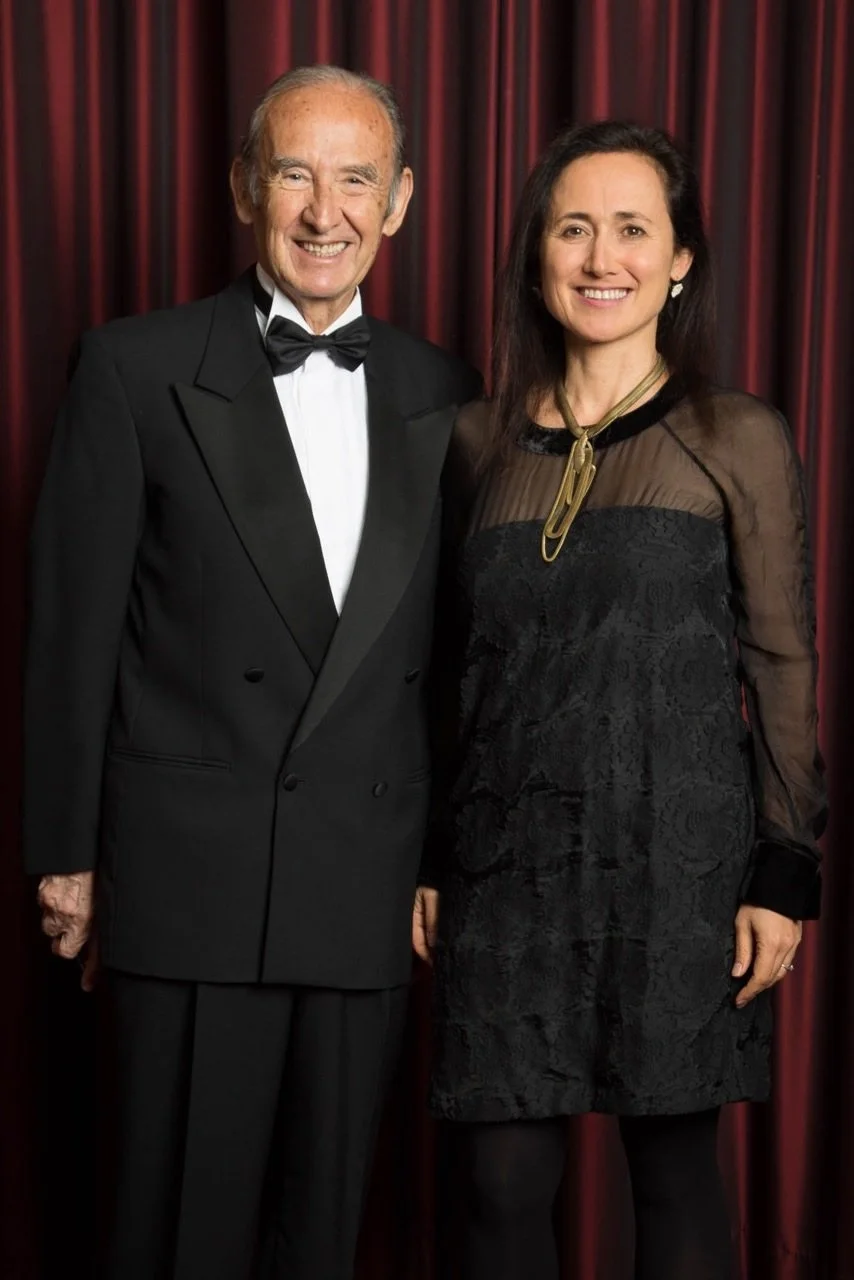
Q: When you decided to create a wine that would carry your father’s name, Nicolás Catena Zapata, what did you most want it to say about him as both a vintner and your father? What aspect of the wine most reflects him?
A: My father is famous in the world as the person who put the variety Malbec on the world map. However, his personal preference is for Cabernet Sauvignon blended with Malbec. And this is mostly because he trained his palate within his goal to make Argentine wines that could stand with the best of the world. The wines he looked up to were the first growths of Bordeaux, wines like Château Latour, Château Lafite. And today, we actually have a partnership with the Domaines Barons de Rothschild Lafite, the owners of Château Lafite, our partnership wine Bodegas CARO in Argentina.
My father also enjoyed the top Napa wines and Super Tuscans, which are Cabernet blends. He looked up to these wines, and decided that the Argentine version of the Italian Super Tuscans (wines like Sassicaia, Ornellaia, Solaia and Masseto) was a Cabernet Malbec blend. So, that's why we chose his name to represent that wine. And what most reflects him is the fact that this is a historic blend that is held by the world wine experts as the most age-worthy and collectible.
It's a blend that has disappeared over the last century after the phylloxera louse destroyed the ungrafted European vineyards. Then, the blend was reborn in Argentina in my father’s hands —they don't make the Cabernet Malbec blend in Bordeaux anymore. If you want to read more about that, you have to read my book, "Malbec Mon Amour". But back to the story. So my dad brought this historic blend back to life in Argentina. And also with ungrafted vines, which were much more common before phylloxera.
Today, there are almost no ungrafted vines in Europe. But in Argentina, 90% of our vines are ungrafted. We’re bringing back something from the past. My dad is a great pioneer of wine. He loves this blend. It makes so much sense to name it after him.
Q: The wine bears your father’s name, but you played an important role in shaping its vision. How did you balance honoring his legacy with bringing your own perspective and that of your generation to the wine?
A: My father's objective from day one was to make Argentine wines that could stand with the best in the world. And I have the same objective. Everything I do is with this objective in mind, to elevate Argentina, to elevate our region. So, it's very easy to come after my dad, to partner with my dad, to pioneer with my dad, because we have the same objective, and it's very clear. Even if sometimes my father and I do have what we call ‘Socratic debates,’ where we present opposing views, because our objective is so clear, it's very easy to come up with a plan. Sometimes it's his plan, sometimes it's my plan, but once we both decide which is the better plan, we go at it together. The key here is having the same objective, which is to make Argentine wines that can stand with the best of the world.
Q: How has your father’s influence shaped the way you lead and move the family business forward today? Are there aspects of his leadership you’ve intentionally carried with you?
A: My father is an economist. He has a PhD in economics. He studied at Columbia University in New York, and from the time I was a young child, he taught me economics. We would walk by a restaurant, a favorite restaurant that was closing, and I would be so sad, and I'd say, "Papa, we need to give them money," and my father would explain to me what the free market and capitalism meant. He taught me from a young age to understand money, to understand how the economy works.
Even when I decided to study medicine, which I loved practicing for almost 30 years as an emergency physician, I always thought of things with this kind of economic, logical perspective. I think that I still use that kind of logical economist’s kind of thinking in our business. When I have a meeting with my team, the first thing we do at every meeting is ask: what is the objective of this meeting? What are we trying to figure out as a team?
That creates a lot of clarity. We have a lot of dreams as a winery, to elevate Argentine wine, to preserve our ancient winemaking culture, our biodiversity, but there has to be a financial backing for our dreams and for our ideas to actually become possible. We need to find a way for our dreams to come true. So, I think the economist side of my dad has shaped how I think about things and how I always dream with my wallet in mind.
I have to pay for the cool things. One of the things that I love to do is think of a project I really want to do, and think of how we can help someone while doing this project at the same time. One of the things we're doing is preserving the genetic diversity of our vines, which is very unique because the rest of the world is mostly planted with what are called clones. We have instead what would be the heirloom tomatoes of vines, genetically diverse vines, and mostly because Argentina was isolated when the world was getting clonified.
We have this really precious thing that no one knows about. On the one hand, I really want to preserve our vine biodiversity because I'm emotionally attached to it. But I also think that it's something that wine drinkers, wine lovers, would care about and be willing to pay a certain price for something so special and so different. Especially because I think it gives our wines better quality, better concentration, since these vines produce lower yields and more interesting wines, with more interesting flavors and texture.
So, I have an emotional goal, a sentimental goal, and I'm trying to find a way to pay for it. I’d like to try to do something good for the world and then pay for it. That's something that my father taught me.
Q: Is there a particular memory of your father that comes to mind whenever you taste Nicolás Catena Zapata?
A: We compared Nicolás Catena Zapata 1997 to Château Latour, Château Haut-Brion, Solaia, the Super Tuscan from Antinori, Opus One. We did blind tastings in the UK and all over the US, and we actually came in first or second blind. Nobody would guess that it was our wine, with Nicolás Catena Zapata being the first or the second choice. But right before we started the events, of which I attended a few of them because I was actually pregnant with my first child, my father tried to stop the events because he got nervous. What if we did badly?
I basically said to my dad, "We have to take this risk because we need to know the answer: is our Cabernet blend in the league of the best Cabernet blends?" And we ended up doing really well in these tastings, we came in first or second. But I do remember that moment because I had to fight really hard against my dad’s fear and I was pregnant with my first child while practicing emergency medicine. So, there were many things going on at the same time for me.
Q: Nicolás Catena Zapata was born from your father’s ambition to prove that Argentina could produce wines capable of standing among the world’s best. When you taste the current vintage, how do you think the wine—and Argentine wine more broadly—has evolved since that first vintage?
A: First, we used to put more Cabernet Sauvignon and less Malbec in the blend, and now there's a little more Malbec in the blend. I would say that the wine has been consistently fantastic. It's so delicious. When wine experts who are used to drinking Bordeaux wines, such as the negociants, the French merchants who sell this wine in Europe and Asia, taste it, they honestly think it's a Bordeaux wine. Then they say, "But it's a little different. There's something about the texture.”
I once won a bet with a friend of mine who was quite the expert, that I could recognize my wine out of ten top wines in the world. I won a set of golf clubs because I recognized the Nicolás Catena Zapata, because there was something about the texture that I could recognize. It was a cool moment. I felt kind of bad winning a whole set of golf clubs from a friend, but he was very happy for me and he got me a set of fantastic Mizuno golf clubs!
The Nicolás Catena Zapata has evolved into having a little more Malbec, and it's been very consistent and it's also very different according to the vintage, which sounds like a contradiction but is something that's very characteristic of top French wines. Every vintage is very different but there is an underlying character that allows you to recognize the vineyard and producer.
Some people have this idea that New World wines have more consistency, but it's actually not true.
There's no reason why in Argentina you'd have less weather variability than in Europe. That's what's really fun about this wine, that every vintage is so different. We've done some vertical tastings, which are really fun because the wines are so beautiful, but so incredibly different according to the vintage. Yet they always carry this kind of Bordelais Cabernet core, which was my father's intention.
The Malbec is mostly felt in the texture. They are just richer, rounder, a little less astringent, and that's something that's really beautiful about this wine that many people appreciate.
Q: The 2021 vintage introduces a striking new label. What does the new design communicate about the wine and this next chapter of its story?
A: The 2021 introduces a new label and why the new design you ask? That's because this wine is a massal selection. This means it is made from a genetically diverse vine selection of Malbec and Cabernet Sauvignon that exists mostly in Argentina because in Europe (Bordeaux, France) or in California, where Cabernet is famous, they make the Bordeaux blend with Cabernet, Merlot, Cabernet Franc, sometimes a little Malbec and Petit Verdot but never a lot of Malbec like we do it in Argentina.
In Italy, you have the Super Tuscans that are mostly Merlot-Cabernet blends and sometimes a little Sangiovese. These plantings are all clones, which means that they're one plant repeated thousands of times in a vineyard, whereas we have these massal selections, genetically diverse selections —this is the way that vines used to be planted in the 19th century. And also, our vines in Argentina are mostly ungrafted. They're not grafted on American rootstocks because we don't have a problem with the phylloxera louse that attacks the vines of the European vines in the rest of the world.
Because we don't have a significant problem with phylloxera in Argentina, our vines are planted the same way the French vines were planted in the 19th century. That's when all these First Growths —Château Lafite, Château Latour, Château Cheval Blanc, Haut-Brion, Château Margaux, etc — were classified as first growths. So those wines back then in the 19th Century were actually, in terms of the technicality of their plant selection and the way the plants were planted on the soil, more similar to what we have today in Argentina.
This singularity in our vineyards is so cool that we decided we had to put it on the label; we decided to write this story on the label. The label of the Nicolás Catena Zapata talks about the resurrection of this ancient blend of Malbec and Cabernet Sauvignon (today most of the blends in France are Cabernet Sauvignon and Merlot or Cabernet Franc —Malbec has mostly been forgotten, but we have it in Argentina). The label also mentions the ungrafted massal selection. We felt that this story had to be told on the label, and that's why we created this new label.
Q: Outside of Argentina, is there another wine region you feel particularly drawn to? What is it about the wines, landscape or culture that inspires you?
A: We are of Italian descent. The name Catena means connection or chain in Italian. We come from the Le Marche region in the eastern part of Italy, a little bit north of the middle of Italy, near the Adriatic Sea Coast.
That's where our family comes from. We all have Italian passports and we all speak Italian as well as our native Spanish. We spend vacations in Italy. So I am very connected to Italy. And I love the wines from pretty much every region in Italy. I love the Super Tuscans, the Cabernet blends. I love the Sangiovese from Tuscany. I love the Nebbiolo from the Barolo and Barbaresco. I like the sparklings and the late harvest from the Veneto.
And I very much like some of the wines that are coming from the south, the Abruzzo, the whites from the south of Italy, the Etna wines and the Aglianico. Italy would be the region that I most feel an affinity to. I also like Verdicchio, the whites from Marche, which is where my great-grandfather came from, and I feel very comfortable there. This year, we did a pilgrimage there, and we met all our European importers in the village where my great-grandfather came from.
Q: Of all the wines you’ve tasted over the years, is there one bottle or vintage you’ll never forget? What made it so memorable?
It was a bottle of Château Latour, a Cabernet blend. It was the 1939 vintage, my father's birth year, and we drank it with my father and my husband on my father's 70th birthday. We also drank a vintage from my birth year from an Italian producer.
What was really cool is I'm a lot younger than my dad, but his birth year wine was much better. It was so fantastic. I bought three bottles, and we've now had it a second time, and it was equally fantastic. We had a little bit of a hard time with the cork because it crumbled, and we had to strain it with a tea strainer, and it was still glorious and absolutely delicious and unforgettable. I couldn’t stop thinking that I was sitting there in front of my dad, who was 70 years old, and that this wine had been born at the same time as my dad — it was a very magical moment that I will never forget.