
Ryan VanGorder: What Adventure Racing Taught Me About Leadership
By Kristen Oliveri
Behind every leader is a set of experiences that shape how they make decisions, navigate uncertainty and build trust. For Ryan VanGorder, Chief Executive Officer of Opto Investments, many of those lessons weren't learned in a boardroom. They were forged competing in elite adventure races across the globe.
In this Q&A, Ryan sat down with Kristen Oliveri to reflect on the surprising parallels between endurance sports and leadership, sharing how resilience, teamwork, preparation and a willingness to embrace the unknown have influenced both his personal journey and his approach to leading an innovative private markets firm.
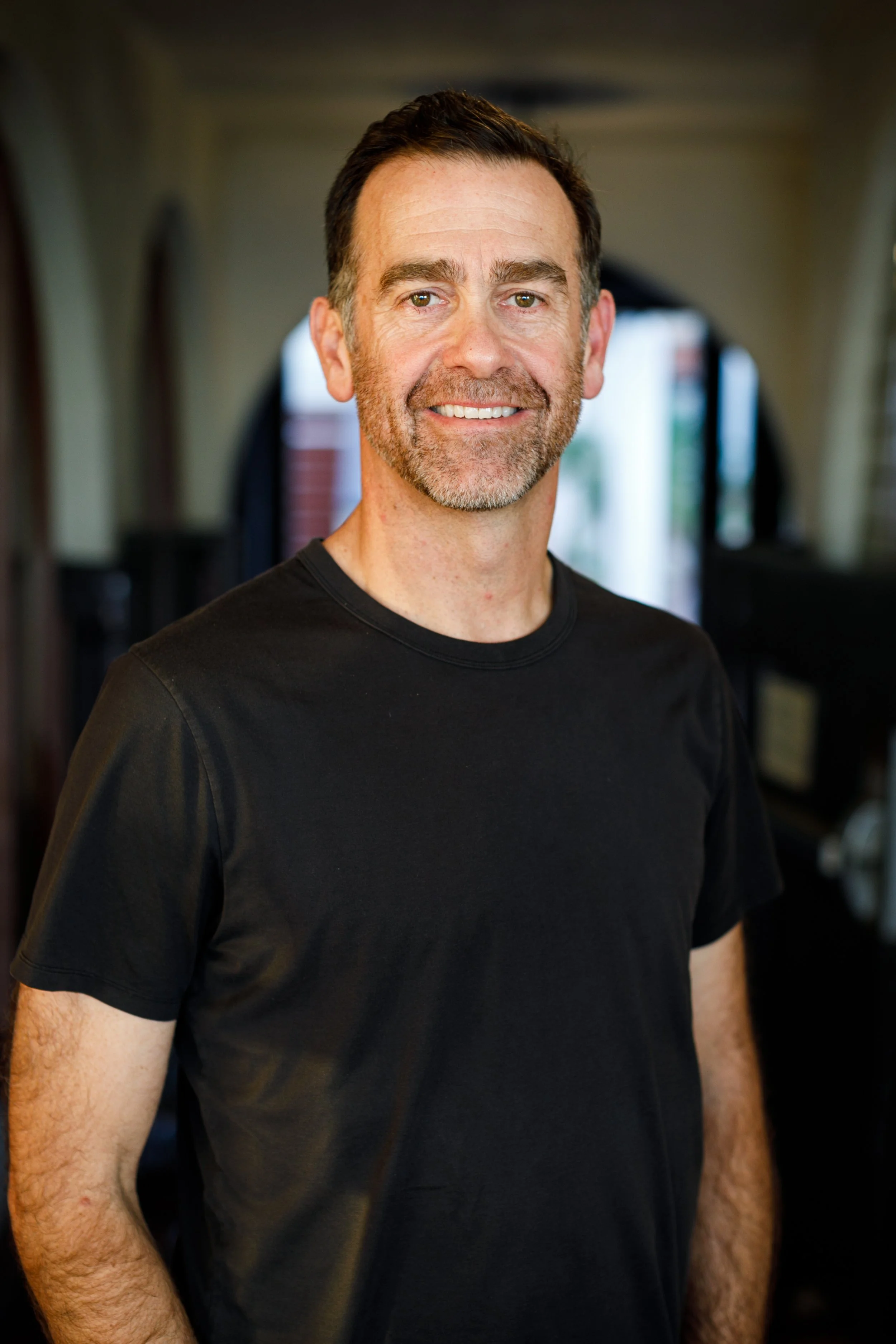
Q: Can you walk us through your background and professional journey, and what ultimately led you to your role as CEO of Opto Investments?
A: I started my career at Quellos, a Seattle-based alternatives boutique, which was eventually acquired by BlackRock. That acquisition led to nearly 15 years at BlackRock, where I worked across finance and business-building roles, including leading finance across the Asia Pacific region. That experience gave me a deep grounding in alternatives and private markets, and a clear view of where the friction in the system lives.
What I kept seeing, across all of those roles, was a gap between what private markets could offer and what advisors and their clients could actually access. The operational complexity was real, but a lot of it did not need to exist. The processes were manual, the infrastructure was outdated, and the inefficiencies were being absorbed by the people who could least afford them.
Opto was the opportunity to address that directly.
What drew me here was the mission: building a private markets business whose interests are genuinely aligned with the wealth channel. That alignment matters to me. It is not just a positioning statement. It shapes how we build the product and how we run the business.
I am also an adventure racer. I have competed in more than 30 expedition races around the world, and the sport has taught me a lot about how I lead. Endurance, navigation and teamwork under pressure. You learn quickly that the conditions are rarely ideal and the only way forward is to keep moving with the best information you have. That translates pretty directly to building a company.
Q: As you mentioned, adventure racing is a significant part of your life. How did you first get into it, and what drew you to that level of endurance and challenge?
A: I have always been drawn to the outdoors, to competition, and to challenges that push you past what feels comfortable. Adventure racing turned out to be the perfect combination of all three.
What hooked me was that it is not purely physical. You are navigating in real time, making strategic decisions under exhaustion, managing a team through conditions that are constantly changing. There is a mental layer on top of the physical one that I find compelling. You cannot just grind your way through it. You have to think clearly and keep going when your body is telling you to stop.
Most of the experiences I have had in those races fall into what people call type-2 fun. Not particularly enjoyable in the moment, but deeply satisfying afterward. I have competed in more than 30 races across the globe, and I keep coming back because that combination of endurance, navigation, and teamwork in extreme conditions is difficult to replicate anywhere else.
It has also shaped how I think about leadership. The lessons from racing are not abstract. When you are deep into a multi-day race, exhausted and off course, you learn very quickly what good decision-making under pressure actually looks like. You learn to trust your team, to stay calm when the situation is uncertain, and to keep moving forward even when you do not have perfect information. Those are the same skills that matter when you are building a company.
Q: There’s something revealing about pushing your limits. What has adventure racing taught you about yourself that you might not have learned otherwise?
A: Racing teaches you where your actual limits are, not where you think they are. Those are very different places.
When you are deep into a multi-day race, sleep-deprived, navigating in the dark, managing a team through conditions that keep getting worse, you find out what you are really made of. You discover reserves you did not know existed. You also discover that the ceiling is higher than you assumed.
But I learned something else, and I learned it the hard way. I hit my limit like a brick wall. Not a gradual fade; not an early-warning sign. I hit the wall. And that experience was clarifying in a way that nothing else has been. I have met plenty of people who found their limit and backed off gracefully. That is not quite how it went for me.
What that taught me is that knowing where the limit is and respecting it are two different disciplines. Since then, I have learned to operate close to that edge without crossing it. To push hard, stay in the discomfort zone, and read the signals accurately enough to know when to pull back before the wall finds you again.
That lesson has been as useful in business as it has in racing. There is real value in pushing hard. There is also real value in knowing yourself well enough to sustain that over the long term. The people who build things that last are usually the ones who have figured out how to do both.
Q: You’ve raced and traveled in extraordinary places around the world. Are there a few destinations that have left a lasting impression on you and why?
A: I feel lucky. Racing has taken me to places that most people will never see in their lifetime, and I do not take that lightly. A few stand out for very different reasons: Tasmania felt like a different world. The landscape is ancient and dense and almost otherworldly. I kept thinking of Jurassic Park. Brazil was a completely different experience. It was wild and tropical, and the environment pushes back at you in ways you do not expect. And then the Swiss Alps, which are stunning in an entirely different way, relentlessly vertical and pristine.
Q: How do the lessons from adventure racing translate into how you lead and make decisions as CEO?
A: The most practical lesson is knowing when to sprint and when to run a marathon. Both have a place. The mistake is applying the wrong one to the wrong moment. In racing, misjudging your pace can ruin your race. In business, it can burn out your team or cause you to underinvest when the moment actually calls for everything you have. Reading that correctly is a skill, and racing has sharpened it for me.
The second thing racing teaches you is that you are capable of significantly more than you think. That sounds like a motivational poster, but I mean it practically. When you are deep into a multi-day race and every signal your body is sending tells you to stop, you find out that the ceiling is higher than you assumed. I carry that into how I think about what our team can accomplish. The limits we perceive are usually not the actual limits.
And then there is the teamwork piece, which sounds simple but is hard to execute under pressure. In adventure racing you are only as fast as your slowest teammate, and the best teams are not necessarily the most talented ones. They are the ones that communicate well, trust each other, and make good decisions when conditions are bad. That is exactly what I look for in the people I work with at Opto. Talent matters, but how people operate together under pressure matters more.
Q: You’ve been intentional about creating internal experiences for your team. Can you share more about the retreats or events you’ve designed and what you hope they cultivate within the organization?
A: Building a great team is not just about hiring the right people. It is about creating the conditions where those people can actually work well together, and that requires shared experience.
We have been intentional about bringing the team together in ways that go beyond the normal rhythms of work. The thinking behind it is straightforward. Trust is not built in meetings. It is built through shared experience, through navigating something together, through seeing how someone operates outside of their normal role. When you have that foundation, people are willing to ask for help and willing to give it. That dynamic is hard to manufacture, but it is also hard to overstate how much it matters.
What I have seen, both in racing and in building companies, is that the teams that perform best under pressure are the ones that know each other well enough to rely on each other without hesitation. That kind of trust has to be earned, and it takes time and shared experience to develop.
The retreats and events we design are about accelerating that process. Getting people into environments where they are learning something new together, or doing something physically challenging together, or simply spending real time together outside of a work context. Those experiences create a shorthand between people that makes everything else work better.
The return on that investment shows up in how the team communicates, how they handle hard moments, and how willing they are to lean on each other when things get difficult. That is what we are really trying to build.
Q: Leadership today is evolving. How would you describe your leadership philosophy, and how has it been shaped by both your professional and personal experiences?
A: My philosophy has been shaped as much by racing as it has by two decades in finance, and the lessons from both point in the same direction.
I am not interested in a leadership model where everything runs through me. That does not scale, and more importantly, it does not bring out the best in people. What I am looking for is a team that takes genuine ownership of their work, operates with real autonomy, and holds each other accountable without needing it to come from the top.
That requires trust, and trust has to run in both directions. I have to trust the team to make good decisions, and the team has to trust that I have their back when things get hard. When that dynamic is working, you do not need a lot of oversight. People know what they are trying to accomplish, they know they have the room to figure out how to get there, and they know they can ask for help without it being seen as a weakness.
That last part matters to me. Racing taught me that the strongest teams are not the ones where everyone is trying to look capable. They are the ones where people are honest about what they need and willing to step up for each other. Accountability and support are not opposites. The best teams hold both at the same time.
I want Opto to operate that way. Ownership at every level, real autonomy, trust, and a culture where leaning on your teammates is a sign of strength rather than a gap in your own capability. That is the environment I am trying to build.
Q: What are you reading, listening to, or learning from right now that’s influencing how you think or lead?
A: I just finished the last short story in Asimov's “I, Robot.” Next up is Stephen Ambrose's “Undaunted Courage”. I was recently in the Shields Valley, which was part of Lewis and Clark's route, and kept finding myself staring up at Sacajawea Peak. That kind of firsthand connection to a story makes me want to go deeper into it.