
The intersection of philanthropy and travel with Maryann Fernandez
By Kristen Oliveri
Maryann Fernandez is a philanthropic industry veteran who believes deeply in the power of travel. She understands the intersection of philanthropy and place, and has spent her career helping the philanthropists of tomorrow give in more intentional, authentic ways.
She sits down with Wealth Reimagined to discuss the transformative impact of travel and to share more about her latest venture, The Curious Philanthropist.
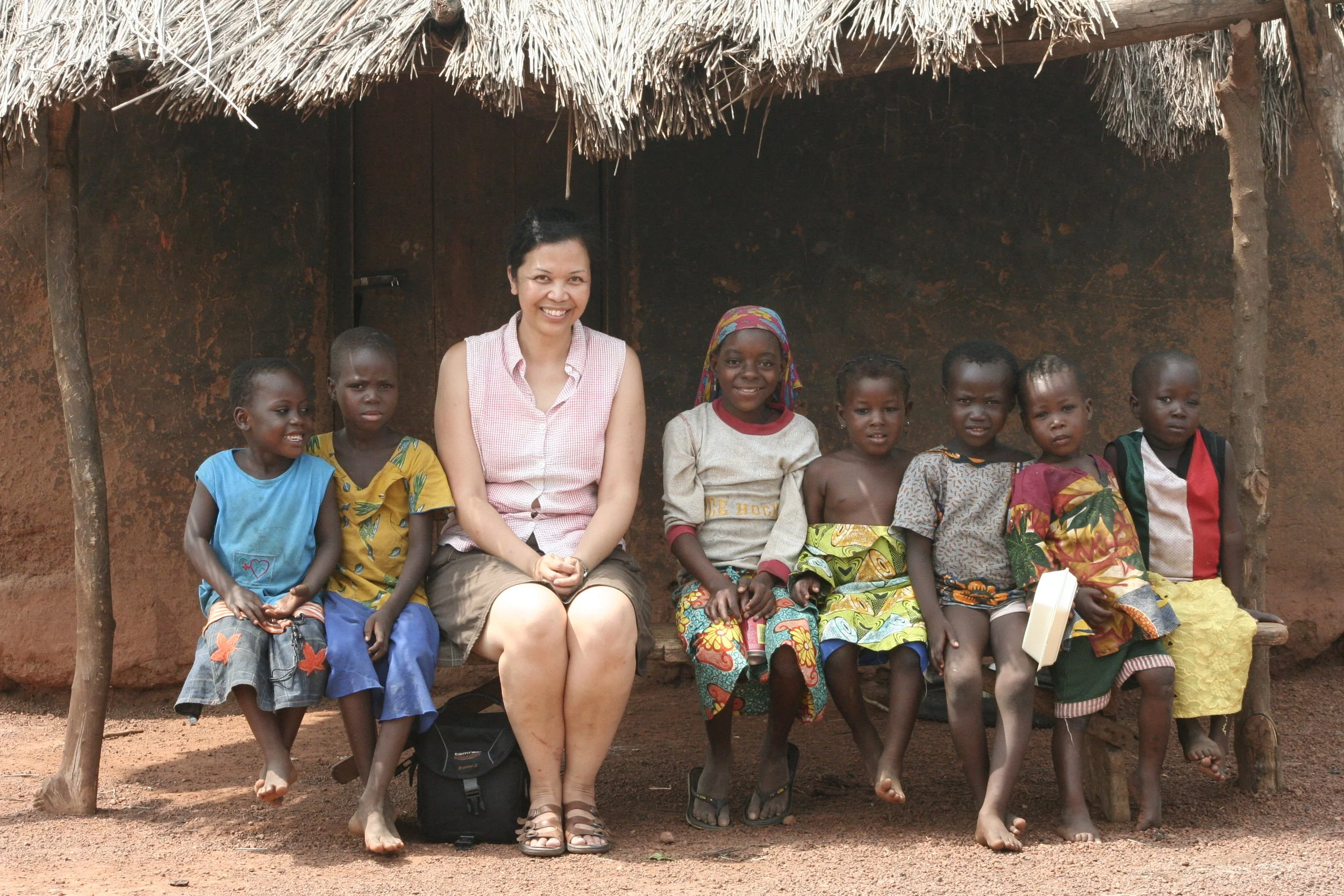
Q: Let’s start with your journey. You’ve had such a prolific career in philanthropy, particularly at the intersection of giving and global travel. How did your professional path unfold?
A: Like many philanthropic advisors, it was a circuitous journey. My first job out of college in the late 1980’s was in commodities trading at Shearson American Express – fast (fractions of a second counted), pressure filled, detail oriented, zero room for error. In a lot of ways, it shaped the way I worked going forward: attention to detail, sense of urgency, and ability to communicate with some level of authority even if I was the low man on the totem pole. At that time, as a woman on a trading desk on Wall Street, if the many, many men around you didn’t feel you could pull your weight, you would be getting coffee.
After a few more positions in the financial industry, I decided on a different path: producing industry conferences for an executive conference production company. I handled all the big events for wealthy families and their close advisors. This was my first exposure to the philanthropic arena, and I was hooked.
During my time at Harris Private Bank in Chicago and then helping to establish a private network of about 150 philanthropists, we were very fortunate to have access to a wide range of leading voices in the philanthropy and nonprofit arena to speak at our events. Our attendees were really inspired, in fact, one attendee went off to Africa to see the work of one of our speakers and eventually became as donor and board member.
I did a consulting project for Ashoka, Innovators for the Public. I met the icon, Bill Drayton, Founder of Ashoka, and learned about the many Ashoka fellows worldwide and the incredible impact they were making in their communities. I believe Ashoka really brought forth the idea of social entrepreneurship. These fellows were willing to seek out innovative solutions to intractable problems. Their personal stories showcased the incredible – and in many cases, unreasonable – commitment to their work.
I’ve always been a traveler and willing to go off the beaten path. I’m up to about 50 countries now. So, as I made more connections with social entrepreneurs and NGOs (non-governmental organizations), I started visiting organizations as part of my personal vacation.
There is no comparison to exploring an issue area on a local level: meeting with organizations, those who benefit from the work, the cultural and practical nuances that make all the difference in a program that succeeds vs one that is only marginally successful. Our communities, our country and the world face many challenging issues that impact lives, economies, and ecosystems. With the stakes so high, I feel like understanding what works and what doesn’t is extremely important. Both domestically and abroad, finding local partners who understand the context and have trusted relationships in the community is key.
Q: Would you say you were ahead of the curve when it comes to blending travel with philanthropy? What did the landscape look like when you were getting started?
A: I was absolutely ahead of the curve. I can’t say I did a comprehensive scan of the landscape but, there are nonprofits who took their largest donors on trips to see the work of their organization, first-hand, and there were also some donor groups who organized excursions.
When we talk about travel and philanthropy, we often think of trips abroad to exotic places. We can also learn a lot in our own backyard. I’ve run a number of what I’m calling “Impact Excursions” that can be done in just a few hours, close to home.
For example, I took some family office executives in Atlanta to explore how people in disinvested communities could access healthy food. We met at a community garden run by a former Clinton appointee and also met with organizations who enabled the use of food stamps at farmers markets and were teaching school children about healthy eating. One attendee sent a note to me saying how the field trip left her invigorated and hopeful and would do this type of excursion again.
Not enough people know of the amazing innovative work that is being done in a doggedly determined and quiet way in this country and around the world.
Q: Can you share a pivotal or transformative moment during your travels that deeply impacted your philanthropic perspective?
A: I have lots of stories that informed my understanding of challenging situations across the globe as well as glimmers of possibility. While it’s easy to give a quick anecdote, out of context, these issues are very complex. Some of these stories were from years ago, so the organizations may have changed.
· I visited an organization in rural India where they were teaching women who were illiterate and semi-illiterate how to do sophisticated technical things – like be solar engineers – without learning how to read. Within a few weeks of returning home with supplies, they are able to light up their rural villages with solar power and do any repairs, even when a man is not at home.
· During a trip to Turkey, we met with two women refugees from Iran who were thrown out of their families and their country for being gay. They made their way to Turkey with nothing. Hearing their testimony was so moving that most of the group needed to take time out to reflect on what they heard.
· I met two entrepreneurs in Rio de Janiero, Brazil, who were starting the Airbnb of the favelas (slums).
· In Pader, Uganda, I visited IDP (internally displaced persons) camps - communities of mud huts which were supposed to be “temporary.” When I asked how long many of them had been there, it was over six years with no immediate plans for further relocation home or elsewhere. Many young children have only known this life.
· I volunteered with a homeless organization in NYC whose vans made stops in different areas in Manhattan to give food to the hungry. I was distributing food to the people who approached the truck: they would take some sandwiches and fruit without even looking up to make eye contact. The driver grabbed one box of cookies on his way out of his house. So, the first few stops, we offered people a cookie. A man looked up at me to say “You have cookies?” Oh my god, the delight of something as decadent as an ordinary boxed cookie from the supermarket!
The benefit of exploring an issue in the context of a local community is that you can see where challenges overlap as well as diverse ways of engaging in your preferred issue area, including comparing and contrasting nonprofit and impact investing approaches.
When you think about how you want to show up not only as a donor but as a partner, these experiences, these datapoints will inform your preferred approach and the impact you want to have.
There are so many more people and stories etched into my memory. I carry them all with me – in fact, their photos are on my business cards!
Q: Tell us about The Curious Philanthropist. What inspired its creation, and what are you hoping to achieve through the platform?
A: The Curious Philanthropist works with individuals, families, and donor groups at the start of their philanthropic journey or at a pivotal moment when something shifts, and it's time to explore what giving can look like next.
A Different Starting Point. What I kept running into, working with individuals and families, was how formulaic the process had become: identify your values, set a strategy, pick organizations, make grants - neat and tidy, and it works. But some people need a different starting point. They need to sit with a partial values conversation, explore a little, try some early grantmaking - and then, clarity arrives. There had to be more room for that kind of journey.
Permission to Explore. There's also the piece of conventional wisdom I kept bumping against: to be impactful, you must focus. And yes, sustained attention on a single issue tends to deepen impact. But what about the moment something grabs you — a headline, or the growing number of people you see sleeping on the streets — and you start wondering what it would actually take to move the needle? That curiosity shouldn't be dismissed as a distraction from your "real" philanthropy. Exploring a new issue broadens your worldview: you learn about the people affected, hear from those on the ground, encounter perspectives you'd never have found otherwise. That has real value.
The core belief behind The Curious Philanthropist is simple: You don't need certainty to begin. You only need curiosity and the openness to follow it.
Confidence in giving comes from understanding, not obligation. We sometimes move people too quickly toward decisions — but there is always room for thoughtful exploration before commitment.
I wanted to create a practice that holds space for the wondering and the wandering before we dig into the strategy.
Open Architecture. Rather than a fixed internal team, The Curious Philanthropist uses an open architecture model — a Collaborative Advisor Network of experienced independent advisors and specialists. For each engagement, we curate a team with precisely the skills needed, whether that's family meeting facilitation, deep issue-area expertise, landscape research, or engaging the Rising Gen.