
By Kristen Oliveri
Ambition can take us far, but understanding what uniquely drives us can shape where we choose to go next.
Cortney McDermott has built a career around human potential, first through leadership roles in business and today as an award-winning author, speaker and executive coach. Her own path has included corporate leadership, entrepreneurship and advising executives, entrepreneurs and creatives on how to better understand their strengths and create success on their own terms.
In this conversation with Kristen Oliveri of Wealth Reimagined, McDermott reflects on the role ambition has played in her own career, the importance of women supporting one another, and why recognizing and owning our individual superpowers can change the way we approach both work and life.
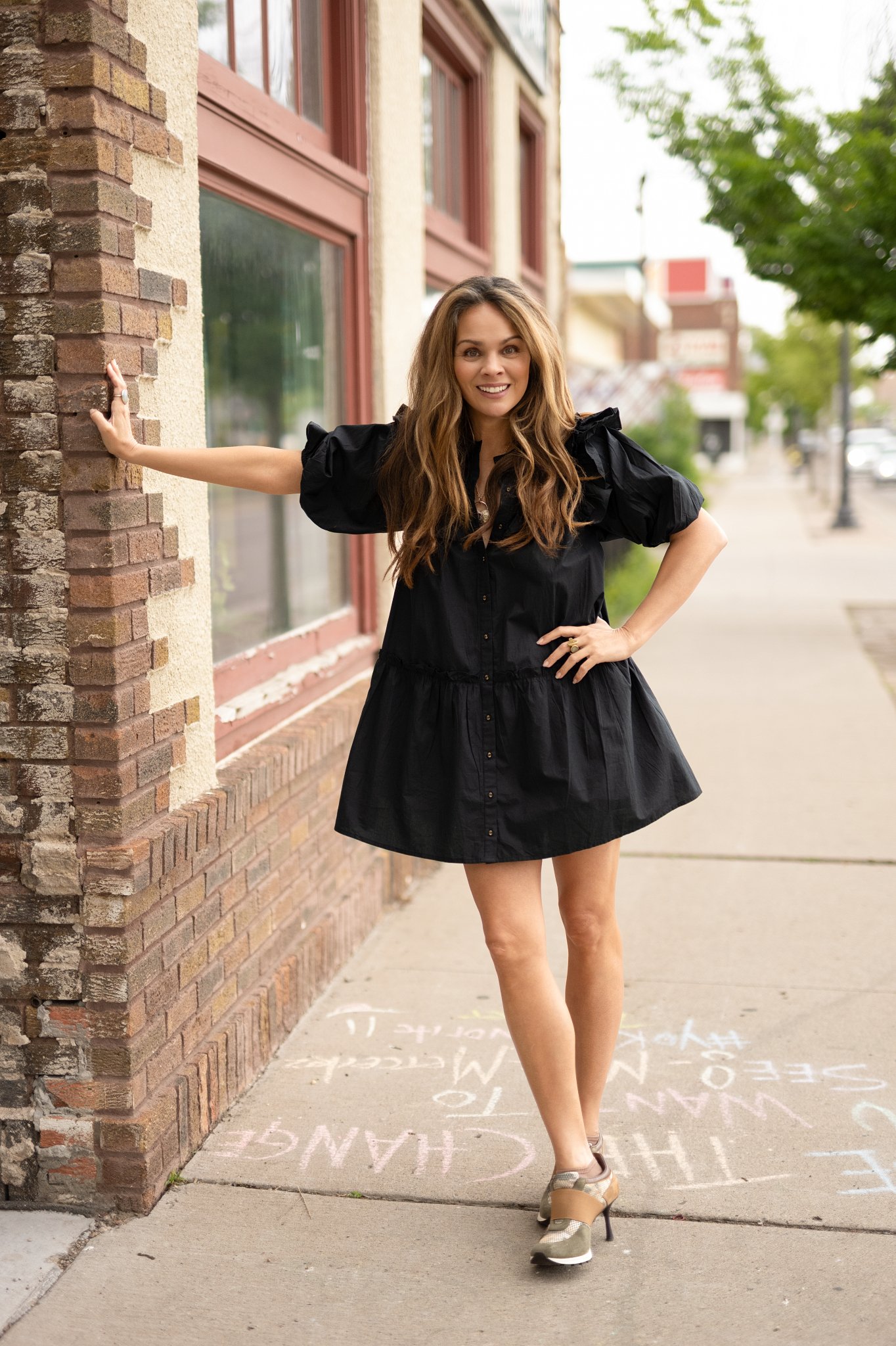
Q: You and I share something in common: we both reached a point where we knew we needed to leave corporate life behind. What was the moment you knew it was time to burn it all down and build something different?
A: There were multiple cold-shower moments— flashes of insight and inspiration about what else might be possible if I stopped living what felt like a pre-ordained script (societal ideas of success). What could happen if I dared to imagine and act upon the intuition to build something new? I once heard that “the opposite of courage is not cowardice; it’s conformity.” I guess I just didn’t want to conform anymore.
Q: Once you walked away, what did you have to unlearn about success?
A: The greatest thing I had to unlearn about success is the notion that it’s externally derived. The idea that success comes from outside of you— the job, the house, the relationship, the money. Success is an inside job. It requires a tremendous amount of redirecting the mind to find the kingdom within. But it’s there.
Q: Do you think more women are questioning the traditional definition of ambition?
A: Absolutely. Most high-performing women seem to intuitively know there’s a better way, only they’re kept too busy to find it. As far as I can tell, ambition itself is not the problem. The struggle arises when ambition is divorced from intuition —the inner intelligence that provides clear direction and the next bold move.
Q: What do you think we want instead?
A: As women, we want to feel safe and cherished enough to relax and trust our innate wisdom. We are prolific creators in environments that foster this safety and inner-to-outer connection.
Q: How do we remain ambitious without recreating the same systems and expectations we wanted to escape in the first place?
A: Oddly, the way to change the current race paradigm is through rest. When we respond from a rested place (alpha/theta frequencies), we have access to a profound inner intelligence that is the cosmos in the chaos. It holds great stillness, which allows for great change.
As more of us access this zero point field, we will experience a major paradigm shift, because coherent ambition-action flows naturally from a coherent heart. This isn’t mystical metaphor; it’s measurable physiology.
Q: What role has intuition played in the way you make decisions now? How did you learn to trust it?
A: Intuition guides my every decision. When I choose to override it, internal incoherence arises almost immediately, and is then reflected in experience. So, I spend a lot of time in deep listening. I ask and wait for the answer.
Trust arises when you see how many times this innate intelligence gets it right. And how, just in the same way you don’t have to consciously beat your own heart, you can rely on this deeper intelligence to guide you through life and business.
Q: You talk about changing our relationship with the mind. How has doing that changed the way you work and live?
A: It is easy to get lost in the multiplex of the mind and to let it spin out of control. It requires tremendous skill, on the other hand, to learn to direct the mind toward a specific aim or state.
Directing the mind is perhaps the hardest work in the world, which is why most people avoid it. Or as Dr. McFarland once said, “Two percent of people think, three percent think they think, and ninety five percent would rather die than think.”
Learning how to think, or actively direct the mind, has been one of the greatest gifts in my life, and I love sharing ways for people to change their relationship with the mind— to be its master, rather than its servant —so that they can experience more of what they want (and less of what they don’t).
This one skill has exponentially improved the quality of my life and the lives of the people I work with.
Q: You’ve turned many of these ideas into books. What does your writing process look like, and how much of your own evolution finds its way onto the page?
A: My writing now is less of a “process” and more of an active listening. I usually get as comfortable as possible, close my eyes, and ask God what needs to be expressed through me. Then Spirit formulates the expression. It’s a very profound experience seeing how perfectly the Creator flows through us when we cultivate the listening-space and intention for this to occur.
Q: At Wealth Reimagined, I’m always interested in what wealth looks like beyond money. What does being wealthy mean to you today?
A: Being wealthy, to me, is recognizing that God is my substance, my supply, and my support. In all things. And in all ways. Instead of reaching for the rotten apple, I rest back in this awareness, and deep peace emerges, right alongside the prosperity, health, right relationship, et cetera.
Q: What do you consider your personal superpower?
A: God‘s gifts flow through me in various ways, depending on who or what is in front of me. People seem to pull codes or keys to themselves through me, depending on what they’re ready for.
Q: What are you reading, listening to or exploring right now that’s making you think differently?
A: I am ever deepening my practice of active “God listening,” so very little in the way of “outside” resources. That said, I’ve felt called back recently to Yogananda’s “Autobiography of a Yogi.”