
By Kristen Oliveri
What happens when confidence becomes a financial asset?
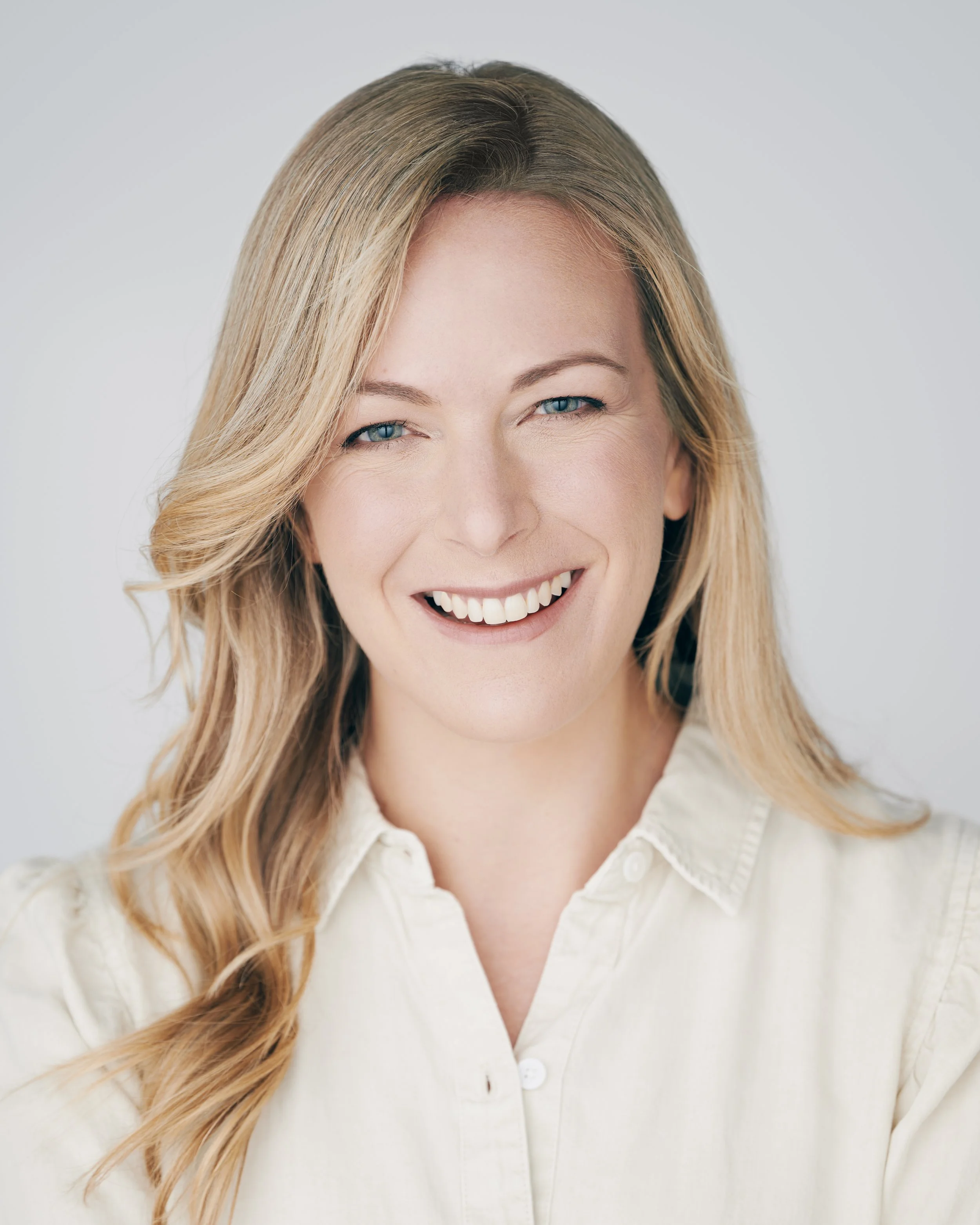
For Cameron Rogers, CFA, Partner at Angeles Wealth Management, confidence sits at the center of many of life's most important decisions. Whether she's advising families through wealth transitions, helping women find their voice around money, or guiding the next generation toward meaningful philanthropy, Rogers believes that knowledge and confidence often grow together.
Our conversation explores leadership, family dynamics, generosity, golf and the habits that help people become more intentional stewards of both wealth and opportunity.
Q: I’ve been looking forward to this conversation. We share a passion for education and empowering women to take control of their financial futures, and not just take control but truly thrive. Why is this mission so important to you?
A: My passion for this work spans everything from advising women overseeing billions of dollars of personal wealth to philanthropic work helping women in war-torn countries double their daily income through training and peer support. What’s striking is that the transformational moment is often the same.
It’s not really about the amount of money. It’s the moment a woman goes from being a delegate in her financial life to becoming an agent in it.
Once that shift happens, it’s electric. You see a completely different level of confidence, clarity, and decision-making because money touches everything — security, relationships, opportunity, freedom.
I learned early that the way families communicate about money can echo for decades. My mom took me to open my first bank account when I was eight, and my dad taught me the concept of cost of goods sold through my lemonade stand. Despite growing up around strong financial lessons, I also watched my parents clash around money. In many ways, financial disagreements remained one of the defining threads of their relationship for decades after their divorce, and it’s a large part of why I care so deeply about helping families communicate around wealth more constructively.
Women already hold enormous economic influence: we play a significant role in household, family and consumer financial decisions, we’re balancing careers and caregiving, and we’re deeply embedded in the financial fabric of society. My focus is helping women recognize the power they already hold and step fully into it.
Q: Golf is a passion of yours. What lessons have you drawn from the game, and how do they connect to your work with high-net-worth clients?
A: I came to golf later in life — about six years ago — after my dad spent decades trying, and failing, to get me interested. During the pandemic, I finally picked it up as a way to spend more one-on-one time with both of my parents. I initially saw it as something social and potentially useful professionally, but what surprised me most was the community it created.
Golf has introduced me to incredible relationships, especially through women’s groups like Fore the Ladies, where I’ve played alongside friends and even clients. There’s something uniquely revealing about spending four hours walking a course with someone.
The game itself also mirrors money management in a lot of ways. It’s technical, but it’s really mental. Golf has taught me that composure is a skill. You constantly have to recalibrate, manage emotion, and avoid letting one bad shot dictate the rest of your round. In many ways, golf is just four hours of managing your own psychology outdoors.
And candidly, golf has also strengthened my confidence. I recently played in a tournament where I walked onto the practice range and was the only woman there. A younger version of me probably would have overthought everything from my swing to where I put my golf bag. Now, I see those moments differently: with confidence and an appreciation for the presence I bring in these environments.
Q: As a woman in the wealth industry, what advice would you give your younger self?
A: Early in my career, I realized that one of the fastest ways to grow was to get exceptionally good at something other people didn’t want to do.
In my first role out of college, I supported three Managing Directors with completely different communication styles. Part of their job involved written outreach to some of the largest institutional investors in North America, and none of them particularly enjoyed writing those emails. So, I volunteered to do it.
I essentially became a ghostwriter at age 22, crafting investment outreach to CIOs and pension funds in each executive’s distinct voice. Looking back, it was one of the most valuable experiences I could have had because it forced me to learn how to communicate investment ideas clearly, concisely, and persuasively very early in my career.
Admittedly, that exact skill may be less differentiated today given advances in technology and AI. But the broader lesson still holds: the people who become indispensable are often the ones willing to solve the problems nobody else wants to solve.
My second piece of advice is: always have your elevator pitch.
Truly, you never know who you’re going to be riding the elevator with — whether it’s a senior executive you can share a recent win, learning, or challenge with, or a potential client you can clearly explain your work to. Our office is on the 22nd floor of the building, so that pitch has to happen in under a minute.
To do that well, you need a running mental inventory of what you’re learning, building, observing, and proud of. Especially early in your career, that level of self-awareness and preparation matters. No talking about the weather.
Q: Wealth is rarely about one person making all the decisions. It is about family collaboration. How do you approach this dynamic with your clients?
A: I try to embody each family member before making recommendations to the family as a whole. I realize that may sound a little “woo woo,” but it’s profoundly helpful.
By that, I mean I try to fully step into their sense of self: how they relate to money, what experiences shaped them, what they fear losing, what they value protecting, and what legacy means through their eyes, not mine.
In finance, we talk a lot about the “efficient frontier”, the theoretical point where you maximize returns for a given level of risk. It’s a useful framework because it assumes people behave rationally and optimize accordingly.
Families do not live on the efficient frontier.
Family wealth conversations are almost never just about money. They’re about identity, history, responsibility, love, resentment, fairness, and relationships. And people can immediately feel when they’re being analyzed versus genuinely understood. I’ve found that once each person feels truly understood, families stop defending positions and start making decisions collaboratively. That’s when the best outcomes happen.
Q: What is your perspective on how the next generation is thinking about giving and philanthropy?
A: Philosophically, one of the biggest shifts I’m seeing in younger generations is a move from permanence to resilience.
Prior generations often thought about philanthropy through the lens of permanence — names on buildings, institutions built to endure forever, legacy in its most visible form. Younger generations still care deeply about impact, but they’re often more focused on strengthening systems and communities in real time so they can adapt, recover, and thrive.
Increasingly, younger philanthropists don’t want to sit passively in an account. They’re interested in philanthropic investing — using charitable assets to fund longer-duration, catalytic investments in different business ventures. There’s an understanding that many of the biggest issues facing society like climate, education, healthcare access, and democratic resilience, are complex and long-term, and that philanthropic investment capital can participate more actively in solutions over time.
I’m also seeing younger generations use portfolio complexity and inertia as a catalyst for philanthropy. For example, a young client may be gifted a low-basis stock position originally accumulated by a parent or grandparent — think a concentrated blue-chip holding from the 1990s. Emotionally, those shares can carry family history and intention. Financially, they can create enormous embedded capital gains and concentration risk.
Through structures like donor-advised funds, younger family members can contribute appreciated shares, diversify thoughtfully, and begin shaping their own philanthropic identity at the same time. We’re also seeing an expanded set of assets enter philanthropic planning — everything from private business interests to digital assets — which is broadening both access to sophisticated giving strategies and the ways people think about deploying capital for impact.
Q: What would you say is your superpower?
A: My superpower is generosity: not solely in a transactional sense, but as a way of moving through the world.
Early in life, I saw that when you genuinely listen to people and try to help without immediately calculating what comes back to you, opportunities, ideas, and relationships compound in unexpected ways.
My parents forced me to talk to everyone growing up — kids, adults, everyone — and while I’m not naturally extroverted, it taught me how to connect comfortably across very different personalities and perspectives.
Over time, that’s created an incredible network of people around me. So even when I don’t have the immediate answer to something, I usually know how to find it quickly because the relationships are real and rooted in mutual generosity and trust.
Wealth today is increasingly interdisciplinary. A single client question can quickly move from investments to tax, estate planning, private business ownership, philanthropy, family governance, or even interpersonal dynamics. No one person can be the deepest expert in every dimension of that complexity.
What matters is the ability to synthesize information, connect the right people and perspectives, and orchestrate expertise thoughtfully around a client’s life.
As the investment side of the industry becomes increasingly commoditized, I think the real value shifts toward being an orchestrator around the complexity of wealth — and the people, relationships, and decisions that surround it.
Q: What is the latest book on your nightstand or Kindle?
A: I’m definitely a physical-book person, so my nightstand is usually a mix of fiction and nonfiction.
I just finished Lady Tremaine by Rachel Hochhauser, who’s a friend from growing up in California. The book is a retelling of Cinderella from the stepmother’s perspective, with very little focus on Cinderella herself. What I loved about it was how it explored a woman navigating status, survival, motherhood, and legacy in a very material world, but doing so through resourcefulness and resilience rather than victimhood.
I’m now moving to the complete opposite end of the spectrum with How to Win Friends and Influence People. I’m almost embarrassed to admit I haven’t read it yet.
What fascinates me is that it was written nearly a century ago, yet people still recommend it constantly. It’s a reminder that while technology and markets evolve rapidly, the fundamentals of human relationships really don’t change all that much.
Q: How do you personally define a life well lived, and how has that definition evolved over time?
A: For me, a life well lived is having the time and space to stay curious — and to make other people feel the force of that curiosity.
I want to leave this world having had a real impact on individual people, not just institutions or outcomes in the abstract.
What’s changed over time is not the definition, but the implementation. Earlier in my life, curiosity looked like saying yes to everything: packing the calendar, chasing every conversation, every opportunity, every idea.
Now I think about it differently. We’re all capacity-constrained. So a life well lived is not about doing the most; it’s about being intentional enough to make the things you do matter.
“The views expressed are for informational purposes only and should not be construed as investment, tax, legal, or charitable-planning advice. Any planning strategy should be evaluated based on individual circumstances and in consultation with appropriate professional advisers.”