
Beyond the Exit: A New Path for Family Business Succession
By Kristen Oliveri
The wealth industry often talks about the “silver tsunami,” this upcoming, unprecedented wave of wealth and business ownership changing hands over the next decade. For many family business owners, the question of succession isn’t just financial, but deeply personal.
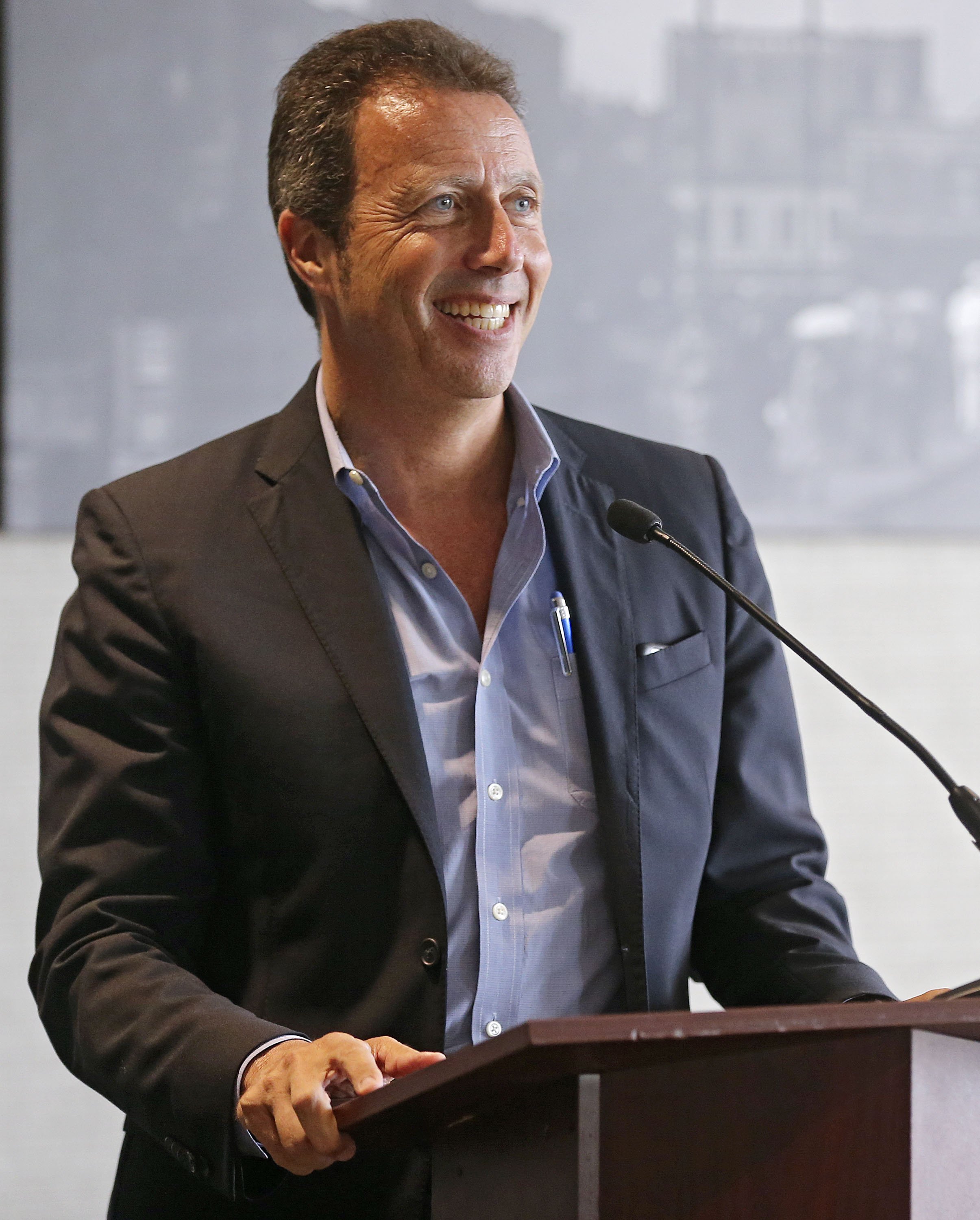
Do you pass the business to the next generation, sell to private equity or explore a different path altogether? In this conversation, Daniel Goldstein introduces a lesser-known, but increasingly relevant option: the Employee Stock Ownership Plan, or ESOP, a structure that allows employees to become owners over time.
While ESOPs may sound technical at first, the concept is surprisingly human. At its core, it’s about continuity, preserving legacy, rewarding the people who helped build the business and strengthen the communities tied to it.
In this Q&A, we break down how ESOPs work, why they’re gaining momentum right now and why more families are beginning to see employee ownership not just as a transaction, but as a thoughtful transition.
Q: Let’s start with the big picture. We’re in the midst of the so-called “silver tsunami”, the largest transfer of wealth and business ownership in history. When family business owners are thinking about succession, where do ESOPs fit among the traditional options like selling to heirs or private equity?
A: Family business owners have several options when considering the succession of their business. First, let’s look at transferring ownership to heirs. DNA, experience, and expectations play a heavy role in this consideration. Is the next generation prepared to manage the business?
Even if non-family management is brought in, are the next generation prepared and willing to effectively take over the ownership, including engaging as stewards with good governance and strategic oversight? Are family expectations in contrast with the desires, ambitions, and life plans of the next generation? The history of multigenerational family-owned businesses has great success stories of passing the torch to a next generation and sad stories of those who felt compelled to run the next leg in a relay in which they really did not want to participate, because it was a family obligation.
Second, is finding another path that is not transferring ownership to heirs. Typically, this would involve a sale of the business to private equity, a competitor or strategic buyer, or to a financial investor. These may offer valid transactions and with fair market value or even a premium paid. It is important, though, to understand the seller’s objective. If the seller’s motivation is to realize the absolute best price regardless of what happens post transaction, then these are viable options. If there is concern to protect the family legacy, brand, and community, then there are potential risks to consider before pursuing those options.
In speaking with sellers of several multi-generational family-owned businesses which became ESOP-owned (Employee Stock Ownership Plan), or more simply employee-owned, I heard an interesting theme emerge. The families had viewed their family business as a community capital, even though they created and owned it. The employees in the community were those who worked for, and with, the family in building the business, as well as building the family’s wealth, legacy, and brand. Therefore, it was of concern to the family to ensure that the community and the employees would transition to being the owners and managers of the business as the family exited, and at a fair market value paid to the family. Ensuring that this community capital remained in the community was a strong motive among many of these families.
There are many other considerations that can work to the family’s benefit when selling to their employees by transitioning to ESOP ownership. One of the greatest is the tax advantage. Many family-owned businesses have a very low cost-basis and the sale of the family business can incur considerable tax liability. There is US tax code that allows selling stock of a privately held C-Corp to an ESOP, electing what is referred to as 1042 exchange, thereby deferring up to 100% of the capital gain on the sale of the business and, if passed through an estate, eventually eliminating the capital gains on the sale. This can create an enormous financial advantage in selling to an ESOP (please consult expert tax advice!).
Q: For those new to the concept, what is an ESOP and what often surprises family business owners most when they first learn how employee ownership actually works?
A: Before getting into more technical explanations, let me lead with the story as my friend Cecil used to advise me. ESOPs are not handouts; they are capitalism and the modern manifestation of the American Dream – allowing those without inherited capital to earn equity by investing their labor. Employee owners do not pay for company stock; they earn it by working for the ESOP.
Also, difficult to find in today’s politically divisive world, ESOPs are so bipartisan that they are nonpartisan. ESOPs address today’s growing chasm of both income inequality (getting to the next paycheck) and the wealth gap (accruing the wealth to fund your retirement). Employee owners working for ESOPs (and there are about 11 million employed by ESOPs across all sectors in the US) earn and save more than double the retirement savings of workers not working for ESOPs.
Simply put, workers who are employee owners working for ESOPs are better able to work towards a secure financial future for themselves, their families, and therefore their community. Many ESOPs are in secondary/tertiary cities or rural communities. ESOPs create a stronger economic fabric for American society.
So, what is an ESOP? The quick answer is that ESOPs came into being in 1974 with the passage of ERISA (the Employee Retirement Income Securities Act). The National Center for Employee Ownership (NCEO) provides this brief description:
“An ESOP is a type of retirement plan, similar to a 401(k) plan, that invests primarily in company stock and holds its assets in a trust for employees. An ESOP may own 100% of a company’s stock, or it may own only a small percentage. ESOP participants (employees) accrue shares in the plan over time and are paid out by having their shares bought back, typically after they leave the company.
ESOPs are often created in the process of selling a business, as an ESOP can buy a departing owner’s shares in pretax dollars on terms that are favorable to the owner, the employees, and the business itself. Selling owners can sell any portion of their stock to the ESOP, and they can defer tax on the gain from the sale if certain requirements are met. Congress created incentives for ESOP to borrow money (“leveraged ESOPs”), allowing them to purchase more shares than they otherwise would be able to.”
What is important is not just how does it work, but also does it work?! There is a wealth of data that has been collected showing how and why ESOPs have a competitive advantage over other forms of business ownership. This data can also be found on the NCEO website as they coordinate much of the research in conjunction with their partners like the Rutgers University Institute for the Study of Employee Ownership and Profit Sharing.
Returning to the story, one of the reasons why ESOPs do better is that when your employees own a stake in their business, they have more reason to engage actively in making that business successful. Employees draw a direct line of sight between their daily actions and the growing value of the business of which they own a share. It is not just about the financial reward, though. Employee-owned companies tend towards greater transparency and inclusion of those nearest the work in making decisions. When employees have a voice and a purpose, this tends to lead to greater engagement which tends to increase safety, quality, productivity, and profitability.
Q: ESOPs have been around for decades, yet they’re still misunderstood. Why do you think awareness is growing now, and what’s changed in the family business landscape to make this moment different?
A: ESOPs were created with the passage of ERISA in 1974, and celebrated their fiftieth anniversary last year. There are approximately 6,500 ESOPs representing a very wide array of sectors and businesses across the US. There are 11 million active ESOP participants (currently employed). As of 2023, ESOPs held over $2 trillion in assets. But it is only recently that there is a growing momentum, really a movement, increasing public awareness of ESOPs. While those numbers are impressive, they only touch about 1 in 15 employees. Even with bipartisan support, there are other matters that take priority on political agendas and constituency calls for support. The good news is that there is a change.
The ESOP community is very collaborative and there has been a groundswell of coordination, education, advocacy, op ed articles written, and more. This collaboration brings together trade associations, nonprofits, lobbyists, universities, researchers, authors, businesses that support ESOPs, and ESOPs. Also, the world of employee ownership is more than just ESOPs and includes structures like coops and EOT (Employee Ownership Trusts). Sharing wealth with employees through innovative broad based equity compensation plans has been garnering great attention.
Championed by Pete Stavros, Co-Head of Global Private Equity at KKR, other PE firms have followed KKR in establishing plans whereby employees at PE backed companies participate in the waterfall of capital when the businesses are sold. There are numerous examples of workers who received life changing checks who otherwise would have received none of that. Why does Stavros and his colleagues and competitors do this? Because they have found that engaging employees through sharing the wealth attains the same competitive benefits described above, thereby increasing the profitability and return to investors. And, it changes the lives of those who previously did not participate in the distribution of wealth.
When I first started working in the world of family office in the 1990s, it was a secretive world, not known well by the public. Now there are books, movies, and multi-season shows to binge watch which have acquainted the public with the idea (perhaps a mistaken idea, but an idea nevertheless!). I hope that somebody will do a series like Succession or Billions about an employee-owned company to get the public more dialed in. There are ESOPs with over 200,000 employees (Publix Supermarkets) and those that have already paid out over $2 billion dollars to retiring employee owners (Houchens Industries). There are stories of front-line workers who retired with over $1 million in their ESOP account. The stories are being told and efforts are being made to increase not just awareness but also access so that more than 1 in 15 in America will participate in employee ownership.
Q: Many family businesses wrestle with legacy, not just financial, but cultural and reputational. How can transitioning to an ESOP help families protect their brand, values, and identity across generations?
A: Transitioning ownership to an ESOP, to the employee owners, is one of the best ways for a family to ensure the longevity of their legacy, brand, and commitment to their employees and the community. Employee-owned is locally owned. When employees share the ownership, they become more careful stewards of their resources, investments, client interactions, and management of every aspect of the business. What employee owner is going to vote to move production offshore, to overly leverage their balance sheet, or to risk brand reputation. ESOPs provide a succession vehicle for ownership, capital, and leadership. Shares stay internal to the ESOP and its employee owners. Particularly for 100% S-Corp ESOPs, which in most cases pay no federal or state corporate income tax, they have greater capital to reinvest in the business.
Because ESOP succession does not rely on DNA, there is greater continuity in leadership. All of these certainly require education, development, and engaging workers as employee owners. Most of the ESOPs with whom I have worked have multiple generations of employee owners, that is sons or daughters of mothers or fathers who work for the same ESOP. That is truly a multigenerational investment in families, communities and continues the legacy.
Q: You’ve seen families move from 100% family-owned to partially or fully employee-owned. How do families think about control, and what does a “hybrid” ownership model make possible that a full sale might not?
A: When considering ESOP as a path to transitioning ownership, it does not need to be a binary 0% or 100% decision. Many family businesses have sold a portion of their business to their employees via an ESOP. That way, the family can keep majority control. That can be indefinitely or to ease the business and culture toward a greater stake taken by the ESOP while also lowering the leverage at any moment in the process.
The family can transact several tranches to move to a minority ownership position or to eventually sell 100% to the ESOP (just as they could in one single transaction). This is important because it can be used to give liquidity to buy out those family owners who are not involved, generationally or geographically distant, or for whatever reason interested in liquidating their position.
As family trees widen from generation to generation, there can be dilution in share ownership, governance, management, and affinity for the business. A partial ESOP has been used by some families to reconcentrate majority or controlling shares in the family members closest to the business, replacing others with a partial ESOP. When a family business sells a slice of the pie (business) to their employees, their employees are better incentivized to grow the value of the whole pie, thereby growing the value of their slice of the pie. This can lead to a win-win where families create access to sharing the wealth with their employees and find that the overall remaining portion of the pie owned by the family grows beyond where it was when they owned the whole pie.
Q: ESOPs are often described as an impact strategy, but without philanthropy or concessionary capital. How do you think about ESOPs as an impact play, particularly in addressing both income inequality and the wealth gap?
A: ESOPs allow anyone to access a means by which to earn a living with competitive wage and benefits, while building equity for the future. It doesn’t matter if you are female or male, young or old, your ethnicity, your education level, your job title or if you have a disability. So long as you can be employed by an ESOP (there are ESOPs in just about every sector), and you meet the Plan eligibility (usually working 1000 hours or more in the Plan year), then you can earn shares in your company. You will not pay for the shares, and nothing will be deducted from your pay. You will invest your labor to earn equity.
Those who participate in ESOPs more than double their retirement savings. Good paying jobs in ESOPs in smaller cities and rural towns help keep people from moving away. It protects the local tax base. Employees and their families are better able to provide for themselves throughout their working life and into retirement. Communities thrive and next generations have better opportunity. Owning a stake in your company is the modern manifestation of the American Dream. It is happening now without philanthropy or concessionary capital, but what if we could accelerate the increase in employee ownership to bring in more than 1 in 15 workers?
There is a growing field of funds being established to attract investment into the transitioning of companies to ESOP ownership. One of the greatest impediments to new ESOP formation is access to capital. More capital will help grow the speed with which businesses transition to ESOPs, and right now is a critical time to pay attention to these transitions as the Silver Tsunami rolls through. There is also a need for impact philanthropy to help fund the research, publications, and curriculum development at universities like the Rutgers Consortium on Employee Share Ownership. The nonprofit Employee Ownership Expansion Network (EOX www.eoxnetwork.org) has been establishing state centers across the US to put boots on the ground near where business owners need resources as they look at their exit possibilities for their businesses. Large foundations have been supporting employee ownership with grants, research, and convening symposiums to bring thought leaders and practitioners together.
Family foundations should contact these organizations to discover how their philanthropy can be directed to partnering in these efforts. Fifty years of ESOPs, with millions, of participants, trillions in assets and multiple billions in payouts mean this is not a social experiment. It is a proven path. With some more fuel, this train can really pick up speed!
Q: One of the most compelling aspects of ESOPs is their role in communities. Why does employee ownership matter so much for secondary markets and rural areas and what happens when those businesses don’t have a succession plan?
A: In February 2020, I had the opportunity to testify before the US House Small Business Committee on the benefits of employee ownership. The story I told was primarily about one of the businesses in the Folience portfolio, Life Line Emergency Vehicles a manufacturer of high quality ambulances that are sold across the US. Folience is a 100% ESOP-owned holding company – a portfolio of businesses that are therefore all 100% employee-owned. I was President and CEO of Folience.
Life Line started in 1985 in Sumner, Iowa. Sumner has a population of about 2,100 and Life Line employs about 200 people. It is the major employer. Sumner is about a 1.5 hour drive from Cedar Rapids, which itself is not in the top 200 of American cities. For over 40 years, Life Line has provided good paying jobs with good benefits. There are opportunities for college educated engineers and skilled trades workers who began right out of high school. There are many second-generation employee owners and probably soon there will be third-generation employee owners. The company has grown, reinvested, is upskilling workers with advanced manufacturing technology, and keeps the community thriving.
There is multigenerational economic opportunity in this rural town that is keeping pace with a complicated and developing world. Life Line’s draw and retention to the community increases ancillary business in the community – shops, restaurants, gas stations, health care, and other businesses. ESOPs, because they are locally owned, tend to be generous in supporting their local communities through charitable giving and giving employees time to participate in community activities (such as volunteer first responders). It is hard to imagine what Sumner would be today if Life Line were to be shuttered to move production overseas or moved in a consolidation or buyout by a competitor.
ESOPs allow for continued succession of leadership. ESOPs are businesses. Businesses require good governance. The ERISA regulation ensures that employee owners, the beneficial owners of the ESOP Trusts, are represented by Trustees that look out for the long-term sustainability of the ESOP Plan. Trustees appoint and oversee Boards of Directors. Boards of Directors, led by Duty of Care and Duty of Loyalty, provide fair and strategic oversight of the executives charged with operating the underlying businesses. Boards and executives are charged with building culture and development plans which ensure succession of leadership. ESOPs are businesses and not all businesses get it right. However, ESOPs have structures which when well managed have been shown to get it right more often.
There are rural towns like Sumner, Iowa with ESOPs like Life Line Emergency Vehicles across America. I have the great opportunity to work with many of them and to see how their employees, their families, and their communities are positively impacted.
Q: From a family dynamics perspective, succession can be emotional and complex. What have you learned from multi-generational families who transitioned to employee ownership over time, and what do they say after the decision is made?
A: In August 2018, I met Michael and Lynn Terry. Michael and Lynn had lovingly grown Cimarron Trailers to be one of the highest quality horse and livestock trailer manufacturers in America. Michael and Lynn were being carried by the ‘silver tsunami’ and wanted to find a good exit strategy for their business. They had seen the fate of other similar trailer manufacturers in their home state of Oklahoma. There used to be many and now there were few. They had been courted heavily by PE and competitors. They cared deeply for their employees, the families of their employees, and their community of Chickasha, OK population 20,000. We were introduced because they were looking for a path to transitioning Cimarron Trailers to being employee-owned and believed that Folience could be a good home for their company, to protect the brand and make sure that Cimarron and their employees did not become a footnote in Oklahoma’s roster of closed trailer manufacturers.
There is a longer story for another time. The short version is that when Folience bought Cimarron Trailers in 2018, making it employee-owned, there were 125 employees. In 2021, the company completed a 50% expansion. In 2022, we added a second manufacturing facility in Kansas. Today there are well over 200 employee owners across their two facilities. Before retiring as President and CEO of Folience, I went for a last visit with Michael and Lynn. I asked them how they felt. Was there any buyer’s remorse or loss of identity? Did they take pride in the fact that there were 210 employees? Michael wagged his finger at me and said, “No Daniel, there are 210 families.” Lynn, not for the first time, added, “This was divine intervention.”
They proudly continue living in the community, celebrating the success of Cimarron as new generations of workers become employee owners. They know that it will now actually be possible for workers at a trailer manufacturer to retire, something that they had never seen.
Others with whom I have spoken have said the same. Many come to find that they have created two legacies. One is the company they built. The other is creating a multi-generational economic opportunity that changes lives outside the walls of their business.
Q: Looking ahead, if you’re advising a family business owner today, someone who cares deeply about their employees, their community, and their legacy, what questions should they be asking themselves to determine whether an ESOP could be the right path?
A: Well, if a family business owner already cares deeply about their employees, their community, and their legacy then I guess my question is how could an ESOP not be right??!
Go to the NCEO and find the resources you need, namely their publications explaining ESOPs and seminars titled “Is an ESOP Right for You”. Attend a seminar where you will find the right people to ask your questions and they’ll answer the questions you didn’t know to ask. Go to your EOX state center where you will find help getting connected to skilled practitioners who can guide you through a feasibility study and let you know what funds are available to those going through studies (some states offer funding).
Talk to practitioners who are knowledgeable about ESOPs, so you don’t get misleading information. Look for an ESOP in your community and ask to meet the President/CEO, tour their business, and talk to their employee owners.