
Beyond the Headlines: On Trust, Access & the Power of Relationships
By Kristen Oliveri
The best relationships rarely begin when you need something.
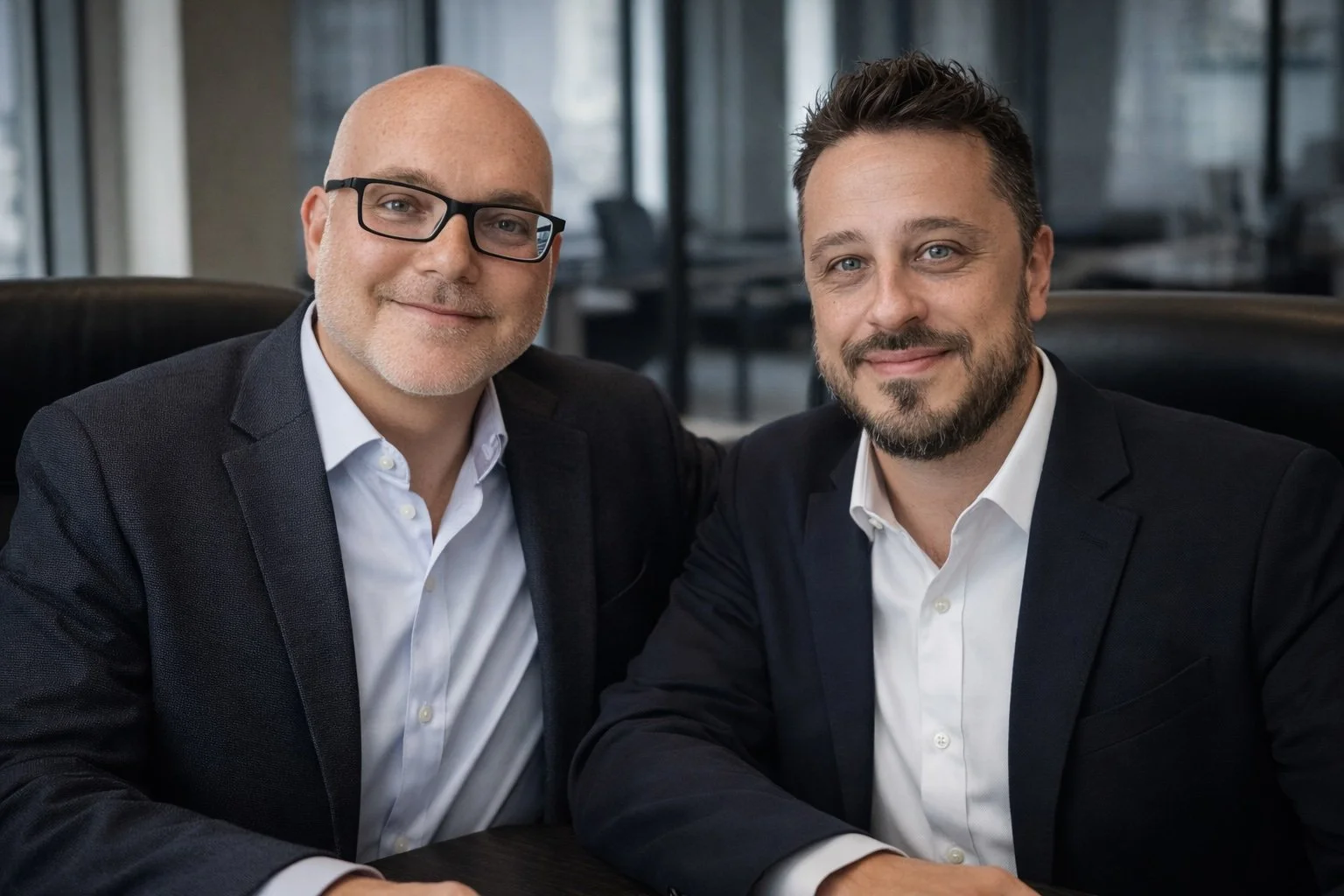
They are built over time through consistency, curiosity, discretion and showing up long before the stakes are high. In my conversation with Jonathan Zaback and Jay Kolbe of Impact Partners, what began as a discussion about strategic communications quickly expanded into a deeper exploration of trust, reputation and the human side of access.
Because when you sit at the intersection of families, founders and capital, you begin to realize something important: public relations, at its best, transcends publicity. It becomes relationship stewardship.
Q: You sit at the intersection of families, funds and founders. How does that vantage point shape the way you see opportunity?
A: Being a strategic communications / PR partner to family offices, funds, and founders affords us a real-time view into how capital actually moves, where trust is built, and where opportunity forms before it becomes obvious to the broader market. People’s POVs tend to manifest vertically, however when you look at the capitalization stack through a horizontal lens, you can get a better feel for what’s going on. When venture capital (VC) cooled in 2023-2024, we saw founders pushing hard to get in front of family offices, and family offices beginning to suggest that they didn’t like the vibes GPs were giving them. A few years later, families are increasingly pursuing more direct investing and seeking differentiated opportunities beyond traditional channels, all while thinking deeply about wealth preservation and legacy.
Funds focus on power laws, deployment, and returns. Founders are building, scaling, and seeking the right strategic alignment. Families are seeking strong returns, but they also love experiencing the investments they make. Meaning, they would much rather be close to and/or supportive of a founder, than to do it through a proxy (e.g. a GP).
We sit on multiple family office advisory boards, and operate with access and a unique perspective that few others have, let alone others in public relations. We are privy to how decisions are shaped behind closed doors, where capital, credibility, and conviction intersect.
High value, strategic communications opportunities often live in the spaces between those worlds. Our role is to help clients position themselves to be understood, trusted, and strategically relevant across all three. That is where reputation becomes a true strategic asset, and where capital formation can accelerate.
Q: There’s a lot of conversation today around access. In your experience, what actually creates meaningful access and what’s often misunderstood about it?
A: We have a saying at Impact Partners: “All business is personal.” Not to be too self-affirming as a public “relations” firm, but relationships fuel access. The question is really about how relationships are built. Proximity, trust, reciprocity, shared values, likability, and very human things of this nature tend to light up the pathways to “access.” You also have to consider what people perceive you can enable for them. This is where your brand and PR can impact or shape your relevance. Being able to project your reach and utility, for lack of a better term, is often what secures your seat at the table.
An Impact Partners client since 2019, David Spreng, CEO of Runway Growth Capital, wrote a book titled All Money is Not Created Equal. We frequently hear about people coming into money and building family offices, who falsely believe that because they now have $500 million to invest, that suddenly they will have a seat at the table on the best deals. That’s just not the case. As Spreng alludes to in the title of his book, if in addition to capital you’re perceived to be someone who can recruit the best executives, secure customers, raise future capital, obtain press, shape perception, or help navigate regulation, then the pathways to access light up. This is where strategic PR and the third-party validation it enables can help shape and project why you matter and/or should have access.
Real access is when trust has been built deeply enough that people take your call, value your judgment, and act on your perspective when it matters. That is where Impact Partners operates. PR is about more than story headlines and quotes. When orchestrated strategically, PR builds credibility and market position that strengthen access over time. Some of our most powerful clients are surprised by the rooms, relationships, and opportunities Impact Partners can help unlock, that would have otherwise remained out of reach. But it requires strategic planning, clear intention, and thoughtful and reciprocal engagements to enter these rooms.
What’s often misunderstood is that access is transactional or can be engineered quickly. It cannot. Relationships develop over time. True access is earned slowly by building trust, and they are strengthened through an alignment of intention. They are also lost much faster than they are gained.
Q: You’ve said that reputation drives results. How do you think about building credibility in a world where visibility is easy, but trust is much harder to earn?
A: Visibility is everywhere, particularly in the digital age. Credibility is scarce. From a PR perspective, this dynamic is one of the most frustrating aspects of the business, investing, and innovation landscape. PR practitioners are typically focused on navigating friction and earning credibility, which is difficult and hard to scale. Marketers tend to prioritize reach, visibility, and controlled messages that are free of friction, and with digital tools much easier to scale.
In this model, it should be no surprise that visibility outkicks credibility for attention. Also, by sheer numbers, PR practitioners represent a small fraction of the total marketing ecosystem. We often joke that we’ve never met a “marketing / communications” executive who isn’t essentially a marketing person forced to take on the role of communications. It’s rarely the other way around.
These two professions require meaningfully different cognitive functions, decision-making, and incentives. The market often pushes them together out of convenience and/or ignorance. This is the “why” that drives visibility ahead of credibility. That said, it is our hope that in an AI / digital slop world that enables volume over everything else, earned validation will be viewed as the crown jewel of marketing influence.
This is where PR should be of high value for families and institutional investors; and/or the people who do their diligence. They search, compare, and look for consistency. In many cases, your reputation enters the room before you do. When that reputation fosters trust and is consistently reinforced, it transcends visibility and becomes credibility.
Q: Your work goes beyond traditional PR. How do you define the role you play for clients?
A: We operate as senior strategic counsel and/or an orchestration layer at the intersection of reputation, influence, and capital. Yes, we develop strategic positioning (narratives) and drive earned media placements. But more importantly, we help shape how companies, investors, and founders are understood by the audiences that impact growth, capital formation, and long-term enterprise value.
Simply said, we help clients understand who they really are. There is a process for priming clients to reveal what makes them valuable and differentiated. The media and vertical markets tend to shower us with recency bias, which causes brands to homogenize their messages. Saying what everyone is saying is a low value communication state. The higher value communications state comes from helping clients push past what makes them feel comfortable (e.g. a market’s echo chamber), in order to get to what’s unique and ownable about their brand.
Our perspective benefits from sitting on two sides of multiple important conversations: LPs to GPs, GPs to founders, family offices to founders, and founders to the aforementioned. Being able to discuss their ideas, challenges, opportunities, etc., before they’re shared with other parties, can be incredibly enlightening. It informs not just by market experience, but by advising family offices and operating close to how capital is actually deployed. We are able to guide clients with a level of strategic precision that goes well beyond traditional PR.
When well executed, PR / communications is a strategic lever that can influence trust, accelerate opportunity, and meaningfully shape outcomes.
Q: You have a horizontal view across capital, operators and builders. What patterns or shifts are you seeing right now that others might not yet fully appreciate?
A: One of the biggest shifts is that reputation is increasingly influencing who can raise, deploy, and attract capital, not just who can operate.
Family offices, sophisticated allocators, and strategic decision-makers are evaluating people, perception, and narrative alongside the numbers. They want to understand who you are, how you think, and what your reputation signals before they focus solely on what you do.
At the same time, the gap is widening between those who can clearly articulate value and inspire trust, and those who cannot. In a market where capital has become more selective, that gap is creating disproportionate winners and losers. Increasingly, communication is evolving from supporting business outcomes to fundamentally shaping them.
Also, on a media call the other day we heard nearly 90%+ of venture capital financing is now pooled in California, New York, and Massachusetts (essentially three cities, San Francisco, New York, and Boston), up from what was previously believed to be around 75%-80%.
When you speak to LPs in the middle two-thirds of the U.S. (arguably a top five or ten global economy), we are seeing some “regional sensibilities” and “misalignment” starting to cause friction in those relationships. It makes perfect sense. There are deep structural, worldview (cultural and psychological), economic tensions, and varying definitions of value creation between the coastal headspace and the middle of the country. Why would that be any different when interior LPs are engaging with coastal GPs?
Family offices in the middle of the country need to see and feel returns; it’s often more than a numbers game. They want to know if any of our venture ecosystem is creating durable value, or are they participating in a self-referential, highly stratified status economy where only a few are winning?
On top of that, venture often requires 10–15 year illiquidity, power-law outcomes, and acceptance that most investments fail. That feels psychologically unnatural and/or irresponsible to off coast allocators trained in more deterministic sectors such as real estate, manufacturing, industry, family enterprises, logistics, etc.
We believe there’s a meaningful correlation between the aforementioned friction and the explosive growth of secondary funds. The secondary market was about $10 billion in the early 2000s, and now it is north of $220 billion, according to UBS. That might need to be its own article.
Q: In your world, how does influence translate into real outcomes?
A: In our world, influence only matters if it changes behavior.
That means capital being raised, partnerships being formed, opportunities being unlocked, and/or reputations being protected when the stakes are highest.
If it does not materially move or enhance outcomes, it is not influence. It is just noise. That’s why we call ourselves “Impact Partners.” PR is not naturally easy to measure. People often try to apply metrics to it, in an awkward attempt to keep PR in the marketing stack, but for the most part what they might present as something impressive on the surface does not directly correlate to actual business success, revenue, or customer / employee retention.
When we started Impact Partners, we intentionally avoided the smoke and mirrors approach to PR measurement. Instead, we asked ourselves, did the work make a real "impact"? Hilariously, this led to some confusion in our early days when “impact investing” was having a bit of a moment.
Q: With so much noise in the media landscape, what does meaningful visibility look like today?
A: Meaningful visibility is not necessarily going to come from volume, which AI is making much worse. It comes from understanding which messages are high-value, and then with strategic precision delivering them to an audience through a validating third-party (e.g. media outlet, event, etc.) to positively impact them.
One well-placed piece of visibility in a trusted publication, in front of the right decision-maker, can create more enterprise value than a hundred impressions that never influence action.
Q: Proximity to decision-makers is often talked about as an advantage. How do you think about building those relationships in a way that’s intentional and enduring?
A: As we know, relationships tend to grow over time. In PR and with the press specifically, you want to strategically and actively build these relationships long before you need them. Public “relations” doesn’t turn on like a switch; it relies on “relationships” that are consistent, trusted, and sustained. Too many business decision-makers only turn to PR when they need it. In reality, the most effective PR strategies are intentional and sustained, grounded in being useful to the broader media ecosystem over time. When it’s your moment, you’re not introducing yourself, you have already “earned” the right to their attention.
From an investor’s perspective, PR is similar to having liquidity. If you aren’t ready for when a good deal comes around, the opportunity to validate yourself will pass you by. The strongest relationships with decision-makers are not built transactionally or publicly. Your best work is done quietly and with discretion. If you are consistent, show real value, and build credibility, you will be able to grow strategic relationships. You do not force outcomes, you must earn relevance and access when the stakes are highest.
Another key is understanding reciprocity. When you show up consistently to support others, whether it’s the media, partners, or peers, without treating every interaction as a transaction or something that is personally beneficial, people remember it (rather, the good ones will).
Q: On a more personal note, what would you say is your superpower and how has it shaped the way you build relationships and navigate this space?
A: Our superpower is orchestrating strategic alignment, identifying patterns, and sensing where markets, conversations, and narratives are heading. This enables us to connect the right people and opportunities before the rest of the ecosystem catches up. Some of this comes from the intuition you develop from years of being in communications, doing interviews, and just being around news cycles. Other aspects of this are distilled from the aforementioned “two-way,” horizontal investor and founder conversations. It is amazing how often we have the same conversations in a given day, with multiple parties across various verticals.
We spend an extraordinary amount of time asking informed questions, and trying to understand how people, companies, and institutions want to and/or are perceived. We lean into the gaps between perception and reality, before it becomes obstacles or missed opportunity. We also use narrative tracking platforms like our client, GUDEA, where we target a variety of conversations across social media to match what we’re hearing in the room with what’s playing out more broadly.
In aggregate, this fusion of perspectives collides and shapes everything we do. It’s like living in an ant colony and having a form of collective intelligence that enables us to help clients close critical gaps early, navigate more strategically, and position themselves more effectively in the rooms that matter most. It also defines how we build relationships.
Sharing reliable communications insights, consistently and directly, with discretion, tends to compound into trust. In our world, trust is the most valuable asset of all. It unlocks clients’ buy-in to do the work that impacts their high-value outcomes.
Q: Community is a big part of how we think about wealth. How do you show up for your community?
A: Our community is built around family offices, funds, and founders who think long term, not in quarters. In June of 2025, in Milwaukee at the Wisconsin Club and Michels R1VER office, we hosted our first event: F3: Families > Funds > Founders. The event’s focus was “Rethinking How We Venture.” We used the gathering to ask questions that have the potential to positively impact the human condition.
As we mentioned, “All business is personal.” PR is already a relationship business. Families are families, so orchestrating trusted ecosystems where you aren’t trying to profit from them directly, that platform highly purposeful topics, reallyresonates for our community.”
When you bring people together to discuss what’s best for the world and humanity, and not what’s best for your bottom line, it inspires and galvanizes people. It was inspiring to hear how much the event “impacted” the people who attended.
Families don’t always align on what the broader media apparatus is focused on. Arguably, society in general doesn’t always align well with much of what's being discussed every day. Family office POVs and interests are often more proximal and are impacted by personal experience, much more than what we see from other business verticals and investors. They have a different orientation with “real work” and solving challenges. Again, they often emanate from more deterministic and tactile industries, and just being more present in a physical location. Sure, the really large family offices are more institutional, and they probably don’t align with this as much. But, with that said, they all want great returns, but some of them are a bit more attuned to human signals and a wider aperture of value creation beyond simply achieving returns.
Because of our advisory board roles within family offices, we are deeply embedded in this ecosystem. It helps us connect thoughtfully, protect trust and privacy, and create value without forcing an agenda.
Community is not transactional. It is stewardship. In this world, how you show up, especially in the smaller moments, often shapes the reputation that define the bigger ones.